
Choosing Shingle Colors for a New Roof Installation in Hamorton
A practical guide to comparing asphalt-shingle colors with outdoor samples, fixed exterior finishes, and full-roof photos before placing an order.
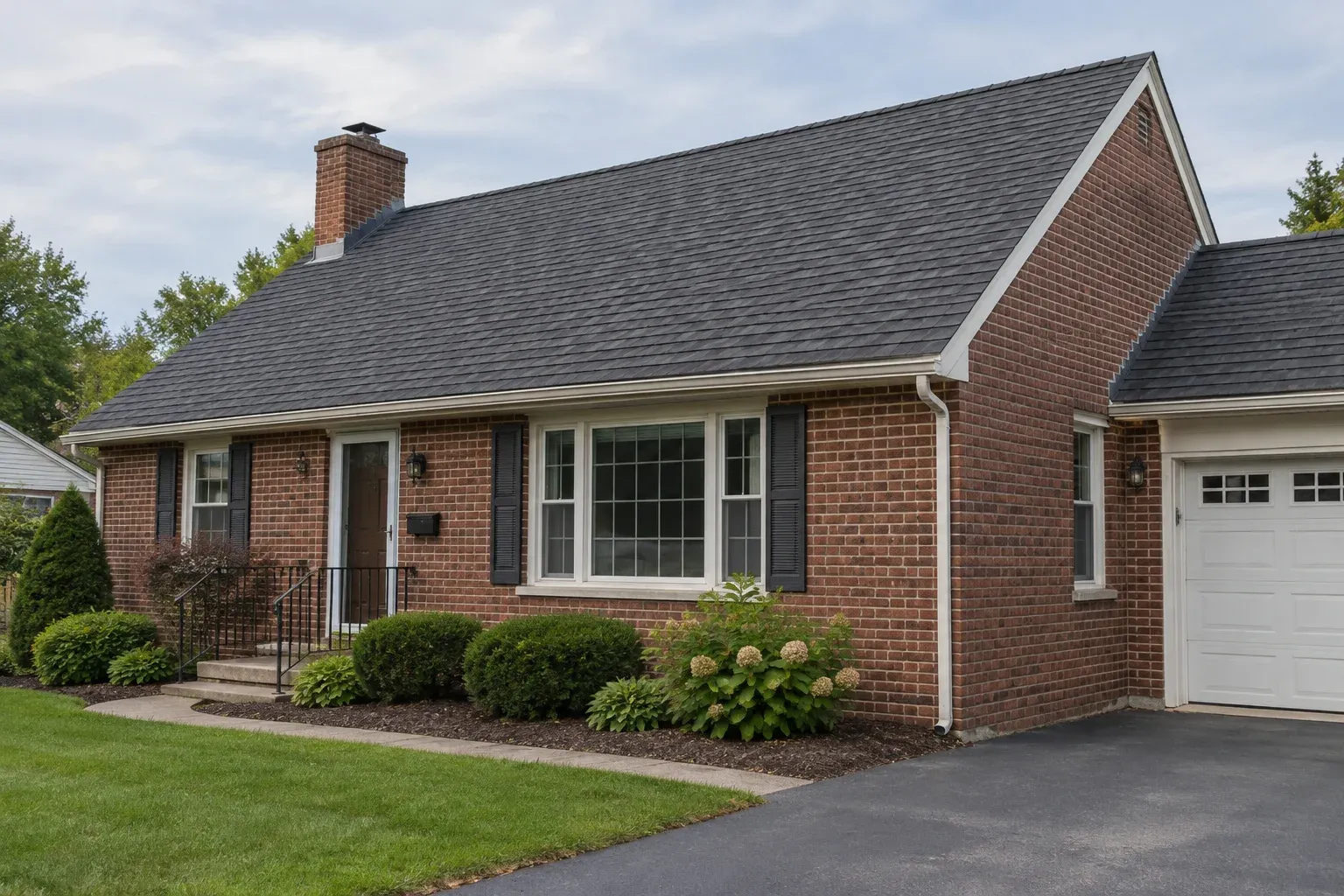
Start with the exterior, not the color chart
Planning a new roof installation in Hamorton involves an appearance decision that can be surprisingly difficult: choosing the asphalt-shingle color. A small swatch may look attractive in your hand yet feel too dark, too warm, or too patterned across an entire roof. Before materials are ordered, compare your shortlist against the actual exterior, in different outdoor lighting conditions, and at the scale you will see from the driveway or street.
The goal is not to find a universally best shade. It is to choose a roof that works with the building's permanent features and your preferred amount of contrast. This approach suits homeowners as well as owners of small offices or other commercial properties using asphalt shingles. Start with a manageable shortlist, then use physical samples and representative product photos to answer different questions rather than expecting either one to tell the whole story.
Build a shortlist around brick, stone, and trim
Look first at materials you are unlikely to change: brick, stone, chimney masonry, and any prominent permanent siding. Red-brown brick may contain orange, purple, or charcoal notes; a stone wall may combine beige, gray, and rust tones. Stand back and identify the dominant impression rather than matching one isolated fleck. A shingle blend can echo a secondary tone, but it should still make sense beside the wall as a whole.
Next, consider trim, gutters, window frames, and doors. Separate existing colors you intend to keep from finishes you already plan to repaint. Otherwise, you may choose a long-lived roof around a temporary door color. Compare one warm option, one neutral option, and one darker option as a starting point. A brown blend may soften the transition to warm masonry, while gray or charcoal can create a clearer contrast; neither result is automatically preferable.
- Identify the dominant color and undertone of permanent masonry.
- Separate fixed exterior finishes from planned paint changes.
- Shortlist two or three options with meaningfully different appearances.
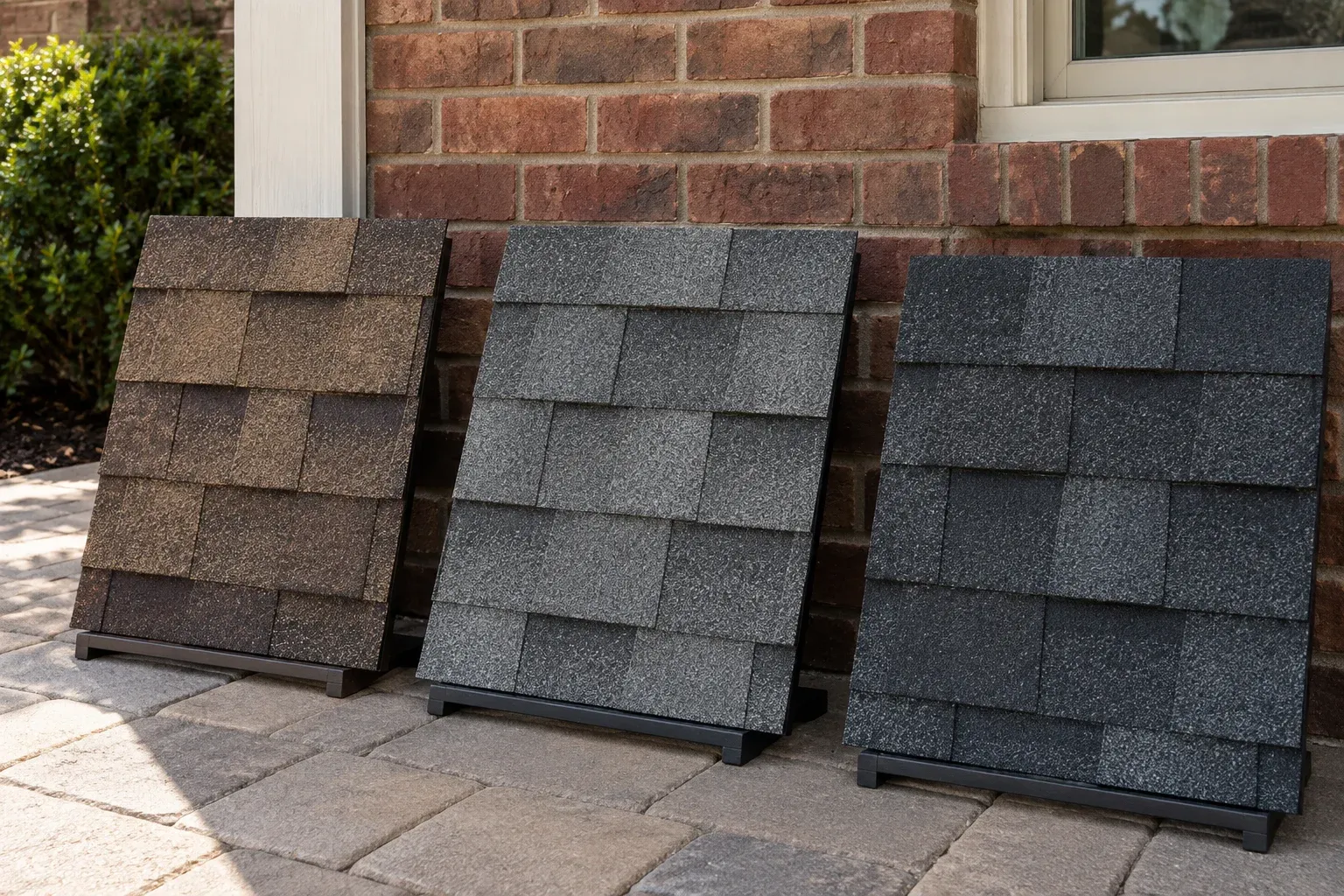
Compare larger samples in daylight and shade
Ask about larger samples for the exact product line you are considering. A display panel showing several overlapping courses gives a better impression of the blend and shadow pattern than a single small chip. If only individual shingles are available, ask how the installed layout can be represented accurately. Do not assume that products sharing a color name have the same appearance: shingle shape, granule distribution, and product design can change the overall effect.
View samples outdoors beside the exterior, using a stable support at ground level. Check them in direct daylight and open shade, and return at another time of day if possible. Bright light can make individual granules more noticeable, while shade may make the blend seem darker or flatter. Compare each sample in the same position and lighting so you are judging the material rather than differences in where you happened to place it.
Judge the color from everyday viewing distances
After the close-up comparison, step back to a normal viewing distance. The strongest contrast between individual granules may blend together when viewed from the street. Conversely, a sample that looks quietly varied nearby can produce noticeable bands or patches across a large roof. A ground-level sample cannot recreate every effect of a sloping roof, but it can help eliminate colors that clearly clash with masonry or disappear into an exterior you wanted to distinguish.
Consider how much roof is visible from the places you use most. A steep, broad front roof plane gives shingle color more visual weight than a shallow roof partly hidden by the eaves. Dormers, porches, and intersecting roof planes also introduce shadows and separate surfaces. For a house or small business entrance, check the approach visitors actually take rather than making the entire decision from a close view beside the wall.
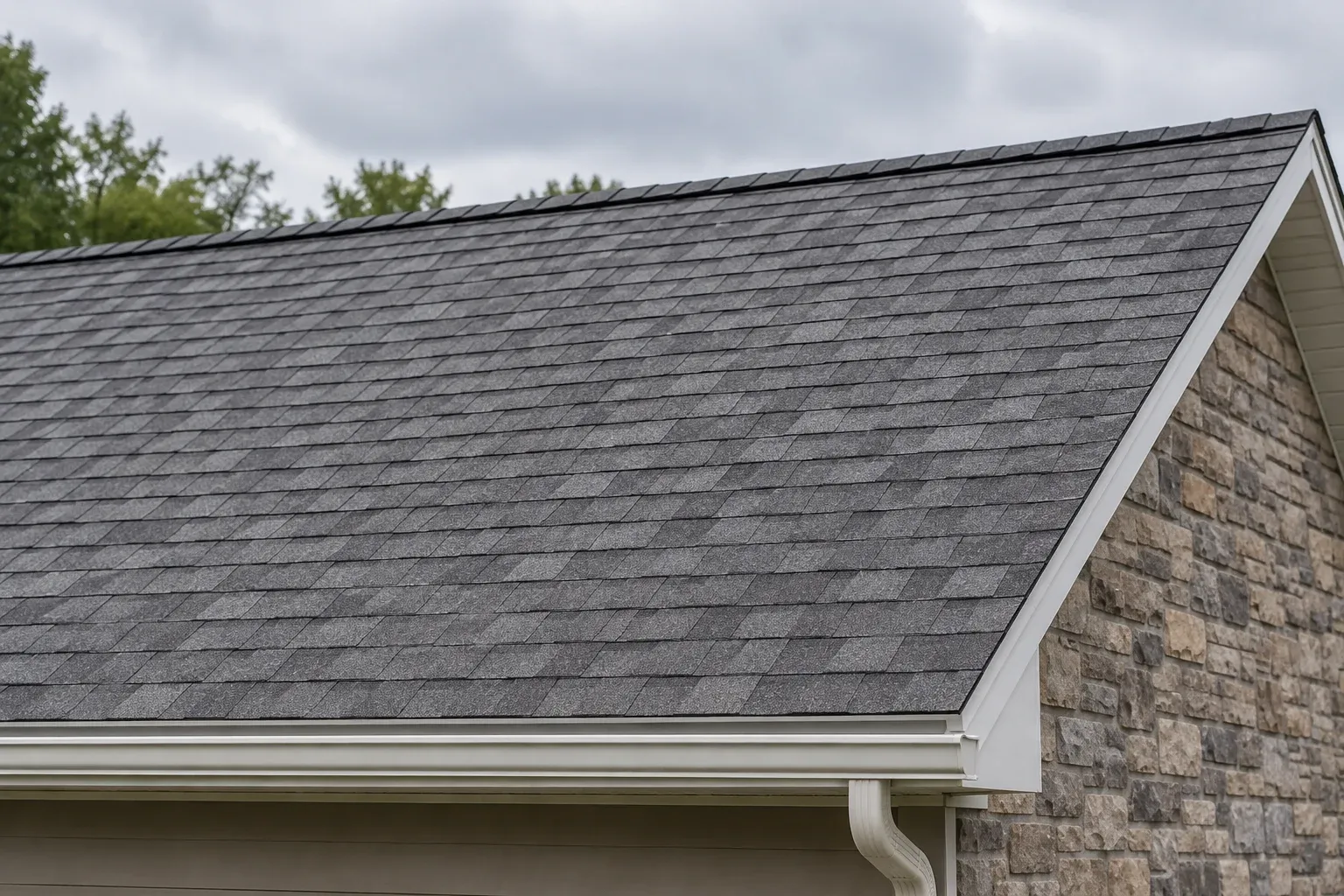
Use full-roof photos to understand color variation
Use representative full-roof photos to evaluate what a sample cannot show: repetition across many courses. Look for images identified with the exact manufacturer, product line, and color under consideration. Favor clear photographs showing a substantial roof area over tightly cropped detail shots. A photo of a different shingle with a similar name is not a reliable substitute, even when both products are described broadly as weathered gray, brown, or charcoal.
Look at more than one photograph when possible. Notice whether light and dark areas appear softly blended or strongly separated, and whether the roof reads as mostly one color from a distance. Choose examples with exterior materials and roof shapes reasonably similar to yours. Screens, image editing, and lighting can shift apparent color, so use these photos to judge distribution and overall character while relying on outdoor physical samples for the closest color comparison.
Confirm the selection before material ordering
With two finalists, make the comparison deliberate. View both against the same brick or stone, then ask which creates the relationship you want: a quieter blend or a more defined roofline. If other household members or property decision-makers are involved, have everyone assess the same samples and photos. Descriptions such as 'too blue in shade' or 'more variation than expected' are easier to resolve than a general statement that one option feels wrong.
Before approving materials, confirm the manufacturer, product line, exact color name, and availability for the planned installation. Keep the selection in writing and make sure any proposed alternative is reviewed rather than treated as an equivalent color automatically. For new roof installation in Hamorton, the useful handoff is a clear product choice supported by the sample and photos you evaluated—not just a broad request for a gray or brown roof.
- Confirm the exact manufacturer, product line, and color.
- Check availability before finalizing the selection.
- Record the approved choice and review substitutions separately.
Make the final choice with the whole building in view
For a new roof installation in Hamorton, a confident color choice comes from combining three views: the sample beside your exterior, the sample in changing outdoor light, and the product across a full roof. None replaces the others. Once those views point to the same choice, you have a practical basis for approval. Contact EA Construction & Roofing to discuss your roof project and the appearance questions you want to settle before materials are ordered.
Frequently asked questions
Should shingles match the brick or stone exactly?
An exact match is not necessary. Compare the shingles with the dominant undertone of the masonry and decide whether you prefer a quiet blend or a deliberate contrast. A large sample viewed beside the wall is more useful than matching one small fleck.
Can I choose a shingle color using only online photos?
Online photos help show the pattern across a full roof, but lighting, editing, and screen settings can change the apparent color. Use photos of the exact product and color alongside a physical sample viewed outdoors.
What should I confirm before shingles are ordered?
Confirm the manufacturer, product line, exact color name, and availability. Make sure the written selection matches the sample and representative roof photos you reviewed, and discuss any proposed substitution before approving it.