
Comparing Roof Replacement Estimates in Coatesville: Look Beyond the Total
A practical guide to comparing Coatesville roof replacement estimates by matching materials, installation details, exclusions and cleanup responsibilities.
Start with the scope, not the ranking
Comparing roof replacement estimates in Coatesville starts with a straightforward question: are the contractors pricing the same work? Two totals can look far apart even when the proposals differ in materials, flashing, ventilation or cleanup responsibilities. A lower price is not automatically incomplete, and a higher price is not proof of better value. The guidance below explains how to evaluate estimates without assuming that any particular material or procedure is included. Whether you own a home or manage a rental property or small commercial building with a similar pitched roof, the goal is to understand the scope before deciding what the price means.
Put every proposal on the same comparison sheet
Create a simple comparison sheet with one column per estimate. Use rows for the roof areas covered, tear-off, shingles, underlayment, flashing, ventilation, disposal and cleanup. Copy the contractor’s actual wording rather than filling gaps with assumptions. Mark anything absent as “not specified,” not “excluded.” A proposal can omit a detail from its description even when the contractor intended to include it; that still needs clarification before you commit.
Check the boundaries of the project as well. Does each estimate cover the main roof, attached garage, porch and any low-slope section? Are gutters or skylights included, excluded or listed separately? The roof replacements page is a relevant starting resource, but your written proposal should define your particular project. Separating optional work from the base scope makes the totals easier to compare.
- Use the same scope categories for every estimate.
- Separate base work from optional upgrades.
- Request clarification wherever the proposal says only “as needed” or “standard.”
Match the roofing material specifications
For an asphalt-shingle roof, “architectural shingles” is a category, not a complete product specification. Ask for the manufacturer and product line, along with the proposed color and any substitution terms. Compare starter shingles and ridge-cap materials too. Two estimates may name the same field shingle while leaving those supporting components unspecified. If another roof covering is proposed, request similarly precise identification rather than trying to compare unlike materials by total alone.
Keep product warranties separate from promises about installation work. Ask what coverage is being described, who provides it and whether any stated enhanced coverage has eligibility requirements or additional costs. Do not assume that a long warranty headline makes two proposals equivalent. The useful comparison is the identified material package, the installation scope and the written coverage terms—not a general claim that one option is “premium.”
Clarify underlayment and roof-edge details
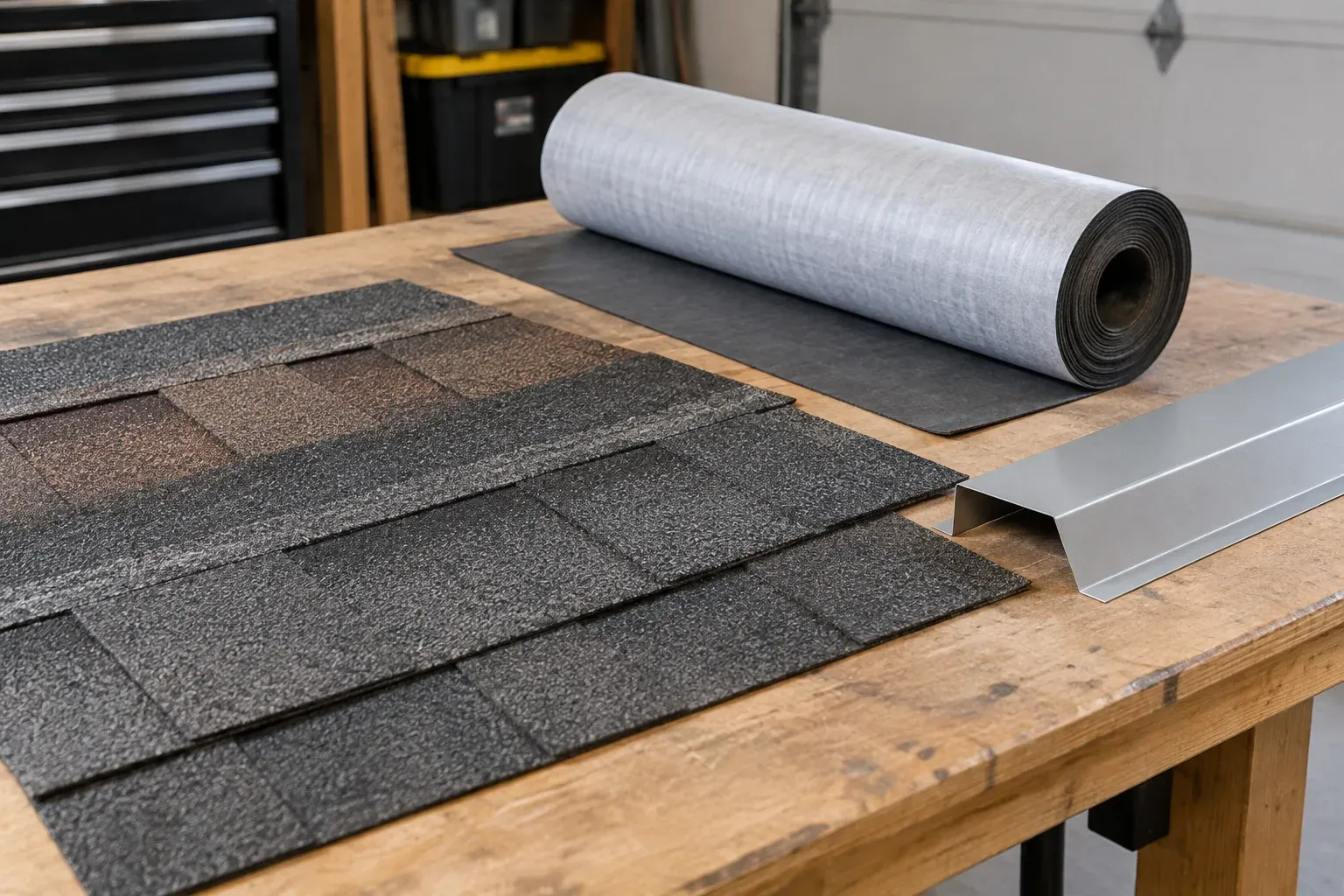
Underlayment belongs on the comparison sheet even though it will not be visible on the finished roof. Request its type or product name and ask where it will be installed. If a self-adhering membrane is included, the estimate should identify its intended locations and extent rather than simply saying “ice protection.” Avoid assuming that every proposal includes the same coverage at eaves, valleys or roof penetrations.
Also check whether drip edge and other roof-edge components are included. Ask how the proposed materials will be coordinated with the roof covering’s installation requirements and applicable requirements for the property. You do not need to design the roof assembly yourself. You need enough specificity to see whether the estimates describe comparable work and to understand the reason for any difference.
Separate flashing replacement from flashing reuse
Flashing directs water away from roof intersections and penetrations, including walls, chimneys and vent pipes. An estimate that says “flashing included” leaves an important question unanswered: which pieces will be replaced and which will remain? Ask for the scope by location. Replacing a pipe boot is different from addressing step flashing along a wall or counterflashing at a chimney.
Reuse is not automatically wrong, but it should be an explained decision rather than an invisible assumption. Ask how existing flashing will be evaluated for condition and compatibility with the new installation. If access could require disturbing siding or masonry, clarify whether that associated work is included. When one proposal replaces flashing and another reuses it, compare the explanation and scope before treating the price difference as either savings or unnecessary expense.
Ask what ventilation work actually changes
“Improve ventilation” is too vague to compare. Ask whether the work involves ridge vents, intake openings, existing roof vents or another specific change. For roofs over ventilated attics, intake and exhaust need to be considered together; adding an exhaust opening alone does not explain the whole plan. Other roof assemblies may need a different approach.
Request the basis for the proposed change and ask how existing openings will be handled. One estimate may include ventilation work while another assumes the current arrangement will remain. That difference deserves discussion, not an automatic preference for the proposal with more vents. The contractor should explain what condition the work is intended to address.
Define property protection and cleanup
Compare property protection and cleanup as defined tasks, not just a final promise to leave things neat. Ask where the debris container will sit, how driveways and planting beds will be protected, and which walking routes will remain available. For occupied rental properties or business premises, clarify access arrangements for tenants, customers, staff and deliveries before work starts.
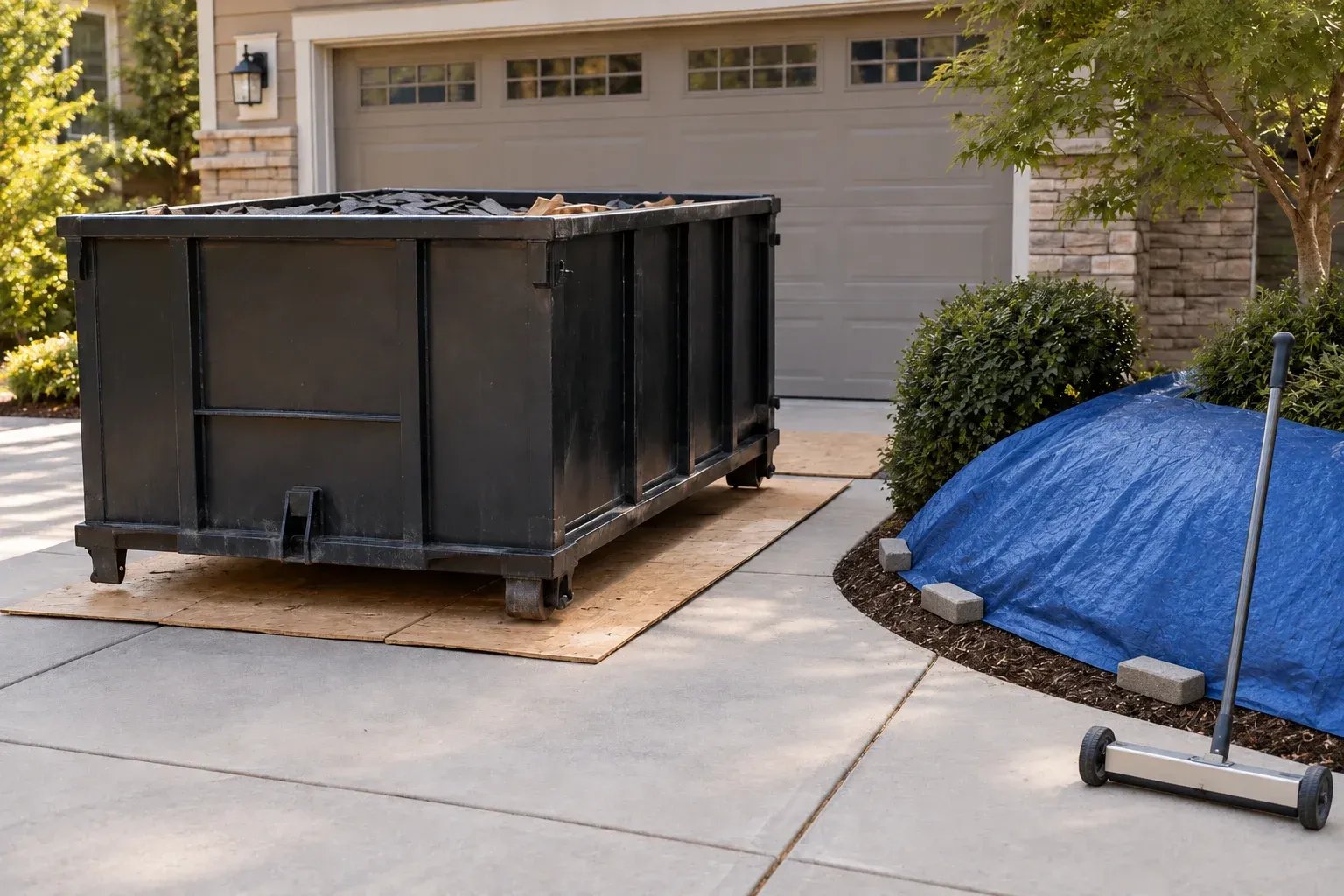
Then ask what final cleanup includes: removal of roofing debris, checks of accessible gutters, a ground inspection and magnetic sweeping where appropriate. A magnetic sweeper cannot collect every type of roofing debris, so it should not replace a broader cleanup description. Confirm who removes the container and whether disposal fees are included. These details make the work’s effect on the property easier to compare.
Confirm tear-off assumptions and get answers in writing
Tear-off should state what is being removed and which roof areas it covers. Ask whether the quoted amount assumes a particular number of existing roofing layers and how a different condition would be handled. Loading, hauling and disposal should also be clear. An estimate labeled “complete replacement” can still leave these assumptions unstated, so request specifics rather than relying on the heading.
Use written clarifications to resolve differences before choosing. For example: “Does this total include removal and disposal of the existing roofing on the porch?” or “Is the ventilation change included in the base price?” For the separate issue of concealed conditions, the guide to planning for hidden roof-deck damage offers additional questions. Keep those contingencies distinct from the known work you are comparing, and request written authorization terms for changes.
Choose with a clear understanding of the difference
Once the scopes line up, compare the totals alongside exclusions, payment terms, anticipated scheduling and written warranty information. Some differences may remain because the contractors recommend different solutions. That is useful information when the reasons are clear. You can then decide whether an added item addresses your needs, request a revised option or rule out a proposal that still leaves essential responsibilities uncertain.
For roof replacements in Coatesville, the best comparison is one you can explain in plain language: what will be removed, what will be installed, what will remain and who handles the cleanup. Keep the revised estimate and its clarifications together before signing. Choosing by a documented scope gives you a firmer basis for evaluating value than choosing by the lowest—or highest—number alone.
Frequently asked questions
Is the lowest roof replacement estimate necessarily a poor choice?
No. A lower estimate may reflect different materials, fewer optional items or different project assumptions. Compare the written scope first, then ask about any missing items. Price becomes more meaningful when you know what each proposal includes.
Does every piece of flashing need to be replaced?
Not necessarily. The answer depends on its condition, configuration and compatibility with the proposed roof system. Ask the contractor to identify which flashing will be replaced, which may be reused and how unsuitable existing flashing would affect the written scope.
What should I do if a contractor answers an estimate question verbally?
Ask for the clarification to appear in a revised estimate or written attachment before signing. The document should identify the included work, exclusions and any conditions that could change the price. Keep that clarification with the proposal you are comparing.