
Gutter Installation in Modena: Planning for Concentrated Runoff at Roof Valleys
A practical guide to assessing roof-valley runoff, gutter corners and downspout routes before gutter installation in Modena.
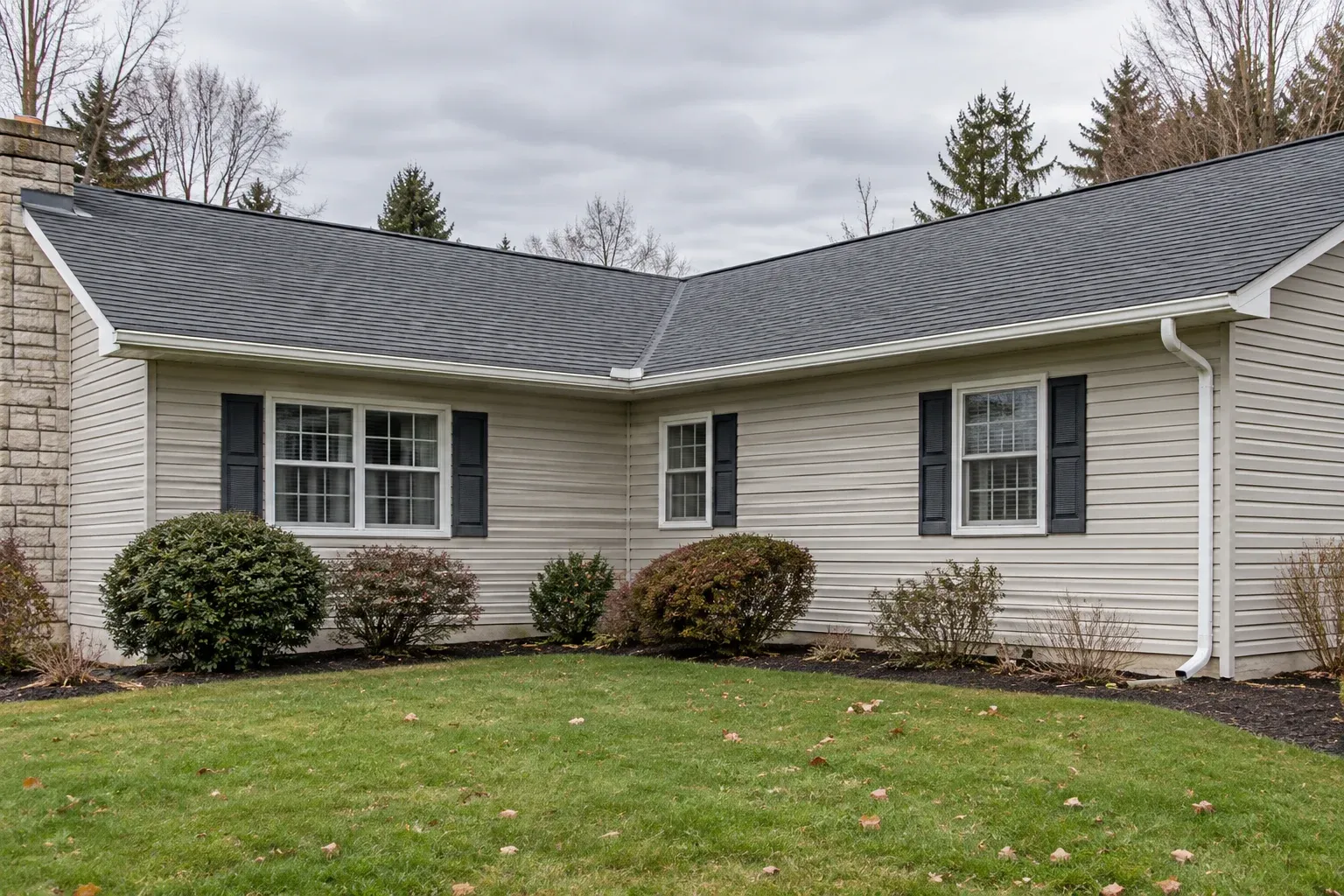
Start with the path from roof to ground
Gutter installation in Modena deserves special attention where a roof valley sends water toward a short stretch of gutter. Instead of arriving evenly along the eave, runoff from adjoining roof planes converges in one channel. That concentrated flow can reveal a weak point at a corner or outlet even when the rest of the gutter appears to work normally. Planning should begin with the roof above, not just the gutter being replaced.
For homeowners, rental-property owners and managers of small offices or shops, the useful question is where that water goes next. A gutter must receive it, carry it toward an outlet and release it through a downspout to an appropriate destination. This guide explains the connections to discuss before installation, without treating a particular gutter shape or accessory as a universal answer.
Identify what feeds the valley
A valley forms where two sloping roof planes meet. Water traveling down those planes gathers along the intersection before reaching the eave. The amount and direction of runoff depend on the roof areas feeding the valley, their slopes and the way the valley ends. A small visible corner may therefore receive water from a much larger portion of the roof than its appearance suggests.
Ask the contractor to identify every roof plane contributing to the problem area, including additions or intersecting gables that are less obvious from the front of the building. Nearby upper-roof downspouts also deserve attention if they discharge onto a lower roof. The goal is to understand the combined route rather than assess each gutter segment in isolation. Ground-level photographs can help frame the conversation, but they do not replace a professional assessment.

Assess how the gutter receives concentrated flow
At the valley’s end, water must transition from a sloping roof into an open gutter. Its direction matters as well as its volume. Depending on the geometry, flow may arrive near an inside corner or approach the gutter at an angle. The contractor should consider how the roof edge, gutter opening and corner arrangement work together, rather than assuming a replacement in the same position will resolve existing overflow.
Visible symptoms help narrow the assessment. Water spilling over the front edge, dripping behind the gutter or escaping at a joint may point to different issues. Describe where the water first appears and whether it occurs only during heavier rain. If observations suggest a roof-edge concern, roof inspections can help distinguish that issue from a gutter-layout problem. Observe from a safe ground-level position; do not climb to investigate during rainfall.
Look beyond the corner to the full gutter run
Receiving water is only the first task. The gutter also needs a workable route to its outlet. Ask how the proposed layout directs runoff away from the valley, whether corners interrupt that route and what condition the attachment surface is in. A sound installation depends on secure support as well as drainage planning. The contractor should explain how the gutter’s alignment and intended slope fit the actual building.
Existing conditions remain relevant, but they should not dominate this discussion. If the roof is staying in place, our guide to keeping an existing roof covers checks at the roof edge before gutter work. Here, the separate priority is whether the proposed gutter run and outlet arrangement suit the concentrated inflow. Reusing an old layout without examining its weak points can preserve the same bottleneck even with new materials.
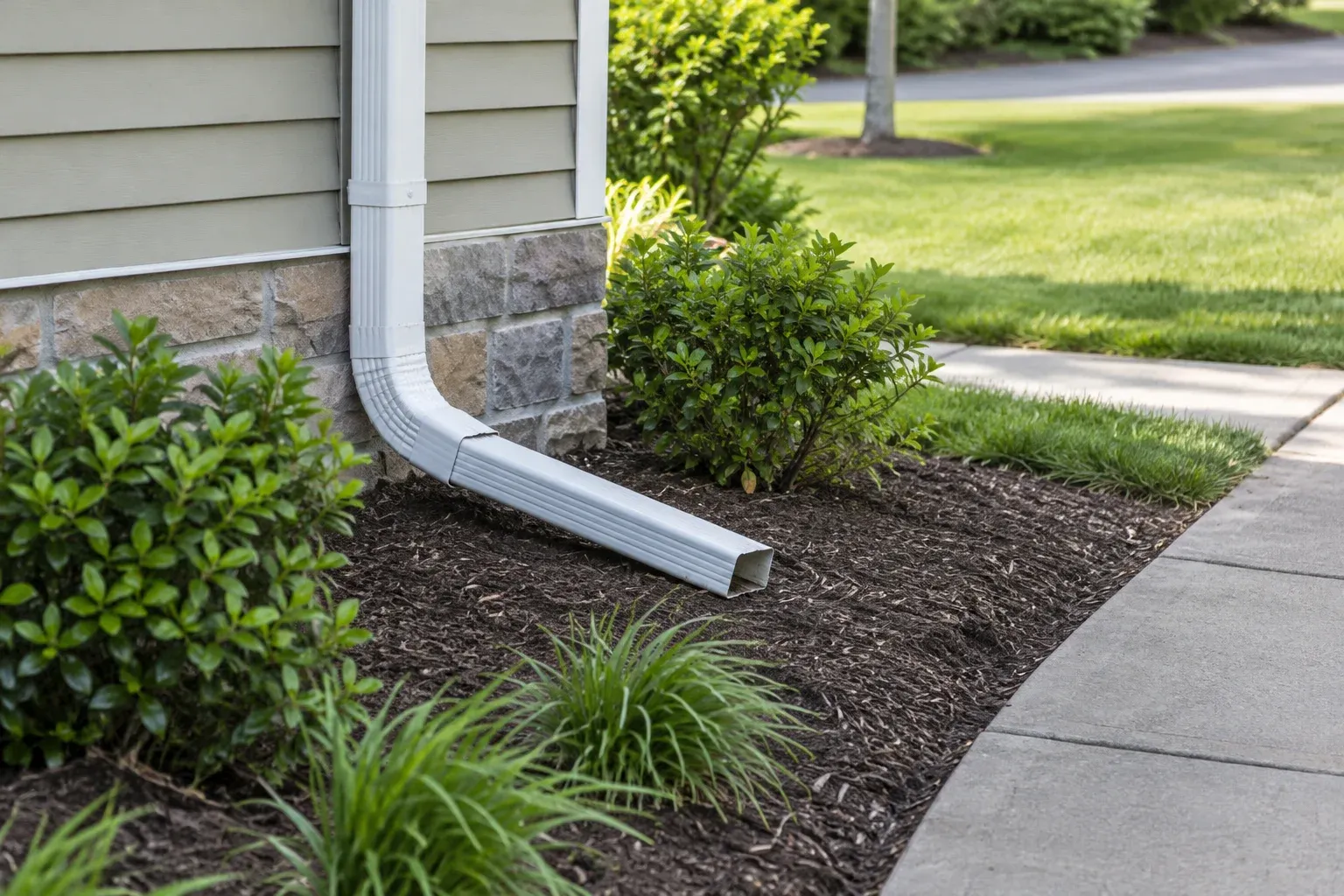
Choose downspout routes with the ground in mind
A downspout location should make sense both above and below the gutter. Placing an outlet near concentrated inflow may be worth considering, but proximity alone does not establish a suitable design. Wall openings, entrance canopies, building corners and available discharge routes can affect the options. Ask the contractor to explain how each proposed outlet serves the contributing roof area and why its position is appropriate.
Follow the proposed downspout route all the way to its destination. Moving water out of a gutter does not help if it then collects beside the foundation or crosses a busy entrance. For a rental property, office or storefront, consider tenant access, deliveries and maintenance equipment as well as landscaping. If an existing underground drain is proposed, ask how its condition and destination will be checked rather than assuming it can accept the runoff.
Treat accessories and maintenance as part of the plan
A splash guard may be proposed to help contain water at a valley discharge, but it should be discussed as part of the complete arrangement. Ask what problem it addresses and how it affects debris collection and cleaning access. A feature that redirects incoming water cannot, by itself, resolve a restricted outlet or an unsuitable discharge route. The explanation should connect the accessory to the observed condition.
Gutter covers deserve the same scrutiny because they change how water enters the gutter. Leaves and small twigs can collect around roof valleys and corners, so access remains important even when a cover is installed. Discuss how the valley area and outlets can be inspected and cleared safely. For buildings with limited exterior access, maintenance practicality should influence the selection rather than being left until a blockage occurs.
Ask for an explanation of the complete drainage route
Before approving work, request a clear explanation of the proposed drainage route and the conditions that need attention first. A useful proposal connects the roof-valley assessment to gutter layout, outlet placement and ground-level discharge. It should also identify unresolved questions, such as concealed damage or an unverified drain connection. These details make it easier to compare recommendations without relying only on material descriptions or broad claims about performance.
When discussing gutter installation with EA Construction & Roofing, bring any safe ground-level observations of overflow and ask how the recommendation addresses the complete water path. For gutter installation in Modena, the priority is a coherent plan: understand what feeds the valley, how the gutter receives that flow, where the outlets lead and how the system can be maintained. That is a more useful starting point than replacing a troublesome corner without understanding it.
- Which roof planes contribute runoff to this valley?
- What explains the existing spill or bottleneck?
- How will the gutter and outlets handle the proposed drainage route?
- Where will each downspout discharge, and how will maintenance access be preserved?
Frequently asked questions
Does overflow at a roof valley always mean the gutter is too small?
No. Concentrated runoff can expose several problems, including debris, poor alignment with the roof edge, an unsuitable gutter layout or a restricted outlet. A contractor should assess the whole drainage path before recommending a replacement or modification.
Should a downspout go directly beneath every roof valley?
Not necessarily. The appropriate arrangement depends on the contributing roof areas, gutter configuration, available outlet locations and a suitable discharge route at ground level. Proximity to the valley is only one part of the assessment.
Can gutter guards solve concentrated runoff at a valley?
They are not a substitute for drainage planning. A cover changes how water enters the gutter and still needs maintenance. Ask how the proposed product accommodates concentrated valley flow and how the corner, gutter and outlet will remain accessible for cleaning.