
Roof Repairs in Exton: What to Ask When a Leak Returns After a Patch
A returning leak needs more than another patch. Learn how to document new moisture, understand possible water paths and ask for a clearly defined follow-up repair.
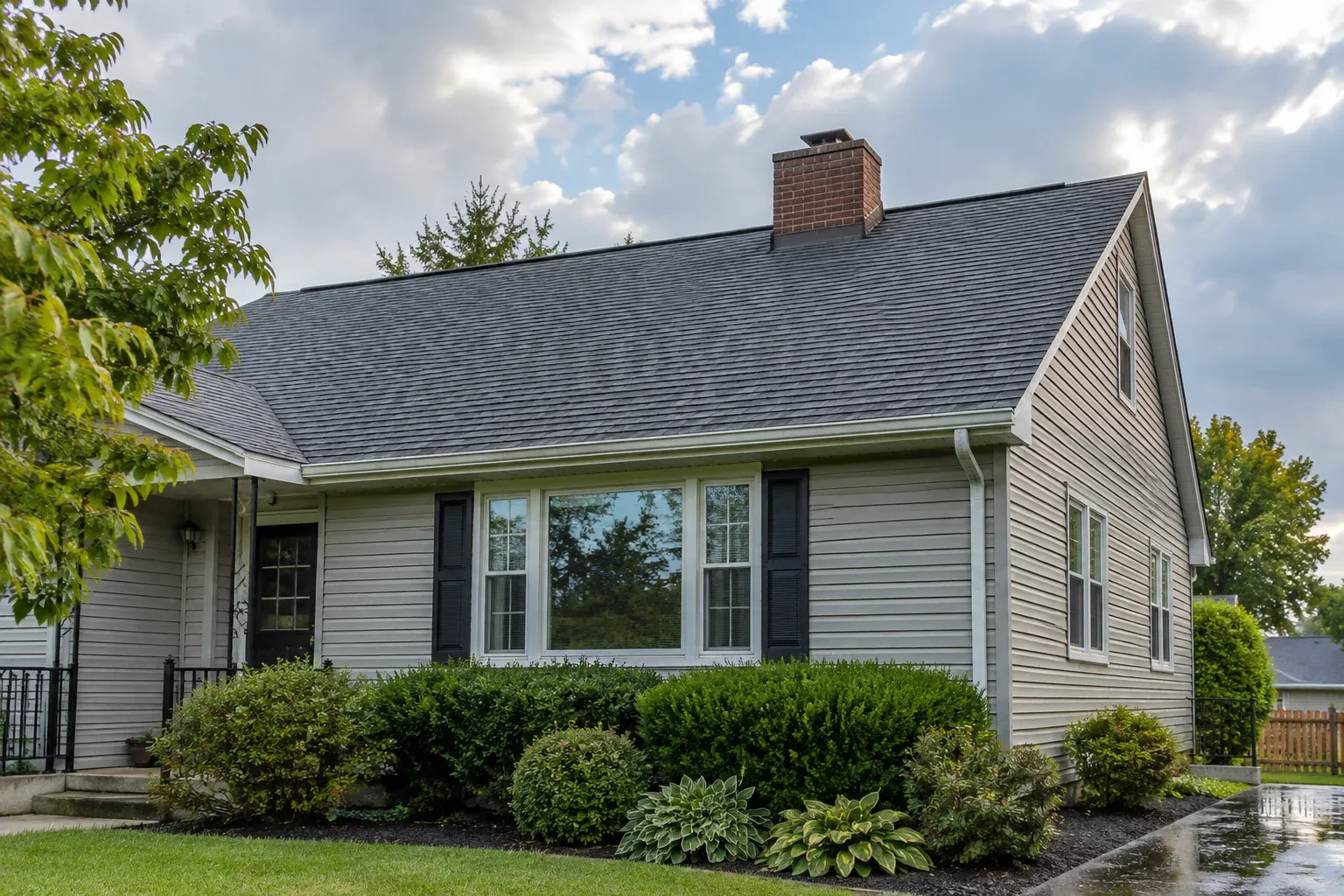
A returning leak is a reason to investigate, not jump to conclusions
Roof repairs in Exton can become frustrating when a ceiling mark reappears after a patch. Before assuming the repair failed, separate two questions: is water entering again, and was its full path identified? A visible roof defect may have been addressed while another nearby opening remains. Alternatively, an unchanged stain may simply be the lasting mark of an earlier leak. Neither possibility can be confirmed from the ceiling alone.
For homeowners, the most useful next step is a focused follow-up, not a guess about blame. Gather the previous repair description, note what changed indoors and ask how the suspected entry point connects to the evidence. The same approach helps landlords and managers responsible for small offices or retail spaces, where a recurring leak may disrupt occupied rooms even when the affected roof area is relatively small.
Separate an old stain from evidence of new moisture
An old water stain can remain visible long after the surrounding material has dried. Its brown outline does not, by itself, prove current leakage. More useful observations include a new drip, a growing boundary, fresh discoloration or a change that appears during or after rain. Photograph the area from the same position so you can compare it without relying on memory. Do not repaint immediately if you are still trying to establish whether the mark is changing.
Appearance and touch are not reliable ways to establish whether material is dry throughout. A professional may use moisture measurements alongside an inspection, but those readings still need context. Stay clear of sagging ceilings, and do not press, puncture or open the affected area yourself. If water is near a light fixture or other electrical equipment, avoid contact and arrange qualified help. Protect belongings only when you can do so without entering a hazardous area.
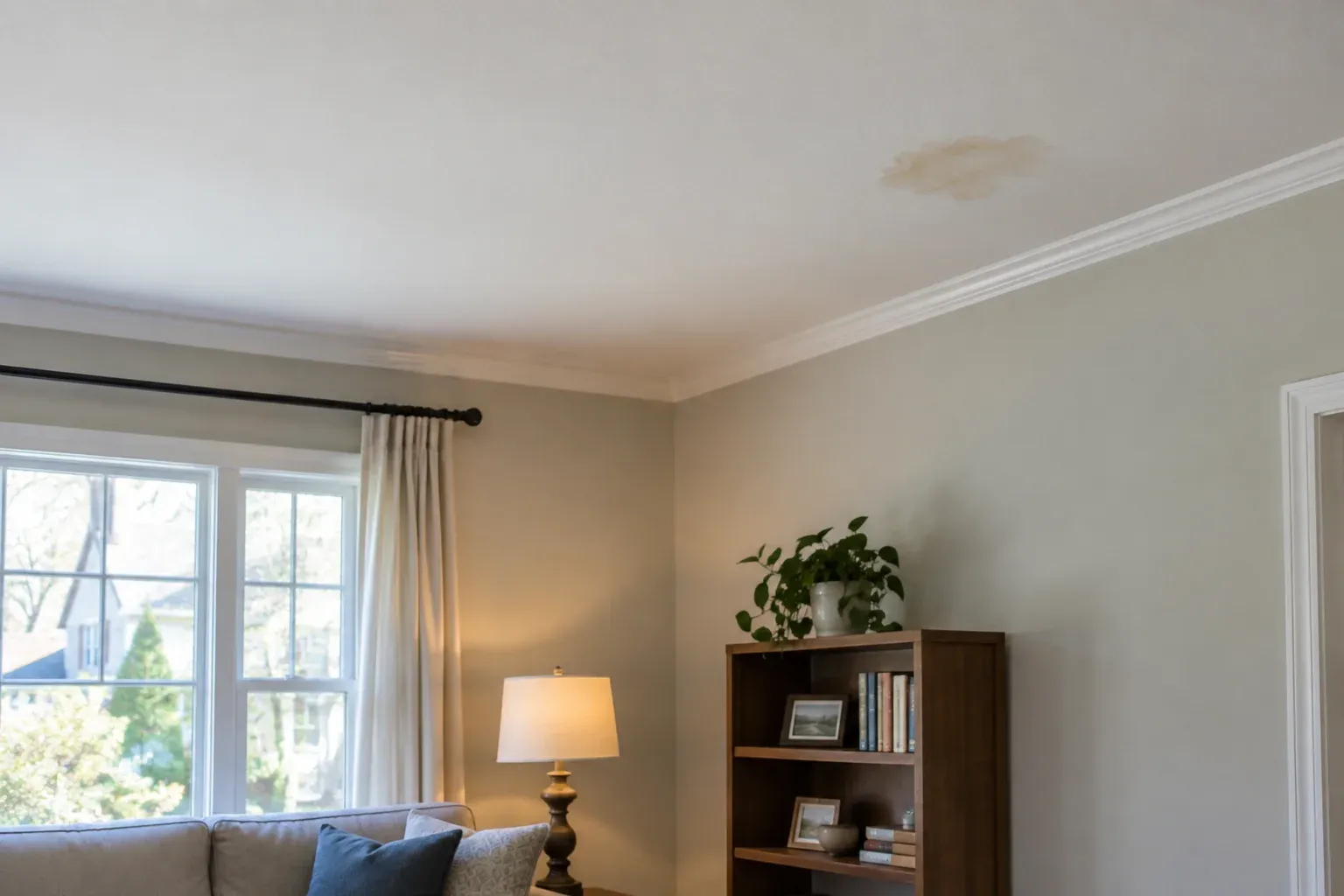
Ask how the water could reach that room
The spot where water appears indoors may not sit directly below the roof opening. Water can run along the underside of roof decking, framing or other surfaces before finding a place to drip. A ceiling stain is therefore a useful location reference, not a map of the entry point. Patching the roof directly above that stain may miss the source if the water began farther upslope or beside an adjoining roof detail.
A roof can also have more than one vulnerable detail in the same area. Shingles, flashing at a wall, a chimney junction or a roof penetration may require separate evaluation. One repair can address one opening without resolving another. Ask what evidence ties the proposed source to the indoor symptoms. A discussion about leak detection is more useful than assuming every recurrence has the same cause as the first visit.
Build a simple record before the next visit
A short record can make the next inspection more productive. Note when moisture first appeared, whether rain had just started or had continued for hours, and whether wind was noticeable. Record whether the problem stops quickly or continues after the weather clears. These details do not prove a particular defect, but they help distinguish a repeatable pattern from an isolated observation and give the contractor something concrete to investigate.
Describe the indoor location using fixed references: the window wall, a chimney breast, a hallway intersection or the distance from a corner. Keep dated photos and any pictures supplied after the earlier work together with the invoice or written scope. For rental or commercial premises, ask occupants to report the first sign of moisture promptly. Avoid asking anyone to climb onto the roof or enter an attic without safe access and suitable footing.
- Date and approximate time of each new observation.
- Room and stain location relative to fixed features.
- Rain duration and noticeable wind conditions.
- Whether the stain changed, dripped or remained unchanged.
- Previous repair description and available photographs.
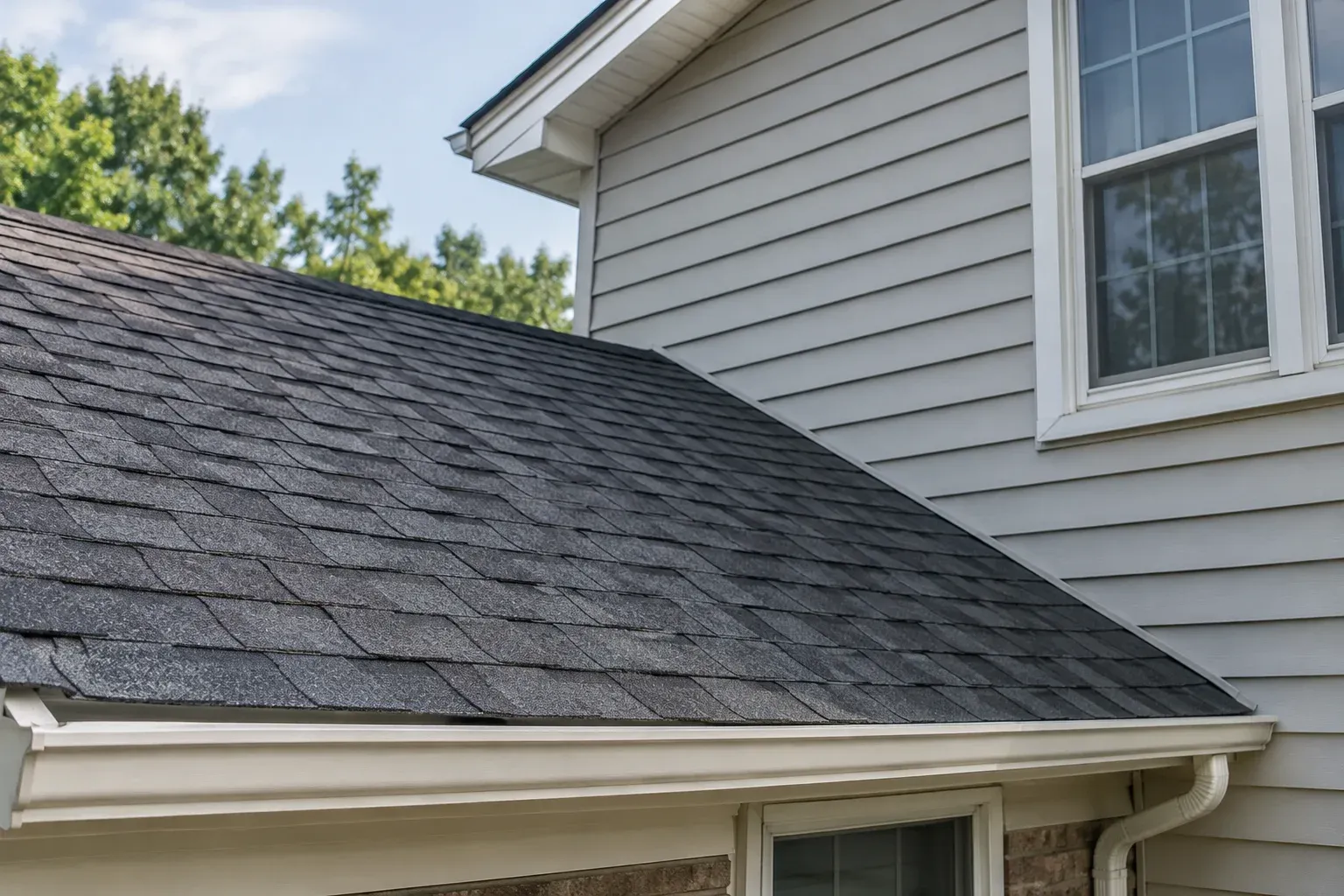
Keep the follow-up questions focused on evidence
Start the follow-up conversation with what the earlier patch was intended to accomplish. Was it a temporary measure to limit water entry, or a repair of a confirmed defect? Ask what was observed, what was repaired and whether any adjoining areas were outside the original scope. This keeps the discussion specific. It also avoids treating a limited repair as a promise to resolve every possible water-entry point on that part of the roof.
Next, ask what can be checked now and what remains uncertain. Depending on access and conditions, an evaluation may include exterior roof details and accessible interior evidence. A contractor should be able to explain the basis for a recommendation without claiming certainty that the available evidence cannot support. If further investigation is proposed, clarify its purpose, cost and limitations before authorizing it. Do not attempt your own rooftop hose test to recreate the leak.
- What evidence identified the original entry point?
- Which materials or roof details did the patch address?
- Could an adjacent detail explain the new moisture?
- What additional inspection would narrow the uncertainty?
- What findings would change the recommended repair?
Define the next repair before authorizing it
Before approving another patch, ask for a scope that identifies the affected roof area and describes the proposed work. Depending on the findings, that might involve damaged shingles, a flashing junction or another localized detail. The description should distinguish material repair from applying surface sealant and explain why the chosen approach fits the observed condition. Ask what is excluded, especially where adjoining roof surfaces or concealed conditions cannot yet be evaluated.
Price is easier to interpret when the scope is clear. Our guide to comparing roof repair quotes explains why the work description matters alongside the total. For a recurring leak, also agree on how follow-up observations will be handled and what you should report after rain. Ask whether interior materials need a separate drying assessment, and delay cosmetic stain treatment until the moisture issue has been addressed.
Move forward with a clear plan for roof repairs in Exton
A returning drip deserves prompt attention, but it does not automatically establish poor workmanship or the need for a new roof. The useful sequence is to document fresh evidence, trace a plausible water path and define work that addresses the findings. Keep the focus on what can be verified rather than choosing between another quick patch and replacement before the roof has been evaluated.
When discussing roof repairs with EA Construction & Roofing, bring your observation record and the earlier repair scope. Use them to ask what needs inspection, what the proposed repair covers and what uncertainties remain. For roof repairs in Exton, a clearly explained next step is more valuable than a confident diagnosis based only on a ceiling stain.
Frequently asked questions
Does a ceiling stain mean the roof patch failed?
Not necessarily. An old stain can remain after the material dries, and newly recurring moisture can have more than one source. The stain's appearance alone cannot establish whether the patch failed. Record changes and ask for an inspection that connects the indoor symptoms with the roof findings.
What should I record before a follow-up roof repair visit?
Note the room, the stain's position relative to a window or wall, when moisture appeared, and whether rain was brief, prolonged or wind-driven. Take dated photographs from the same viewpoint and keep the previous repair scope and photos available.
Should a recurring leak automatically lead to roof replacement?
No. Recurrence alone does not establish that replacement is necessary. Ask whether the evidence supports a localized repair, attention to an adjoining detail, or a broader roof condition. The recommendation should explain both the proposed work and its limits.