
Shingle Roofing in Toughkenamon: A Practical Color Sample Checklist
A practical checklist for comparing shingle samples outdoors, coordinating permanent exterior finishes and using roof photos without expecting an exact preview.
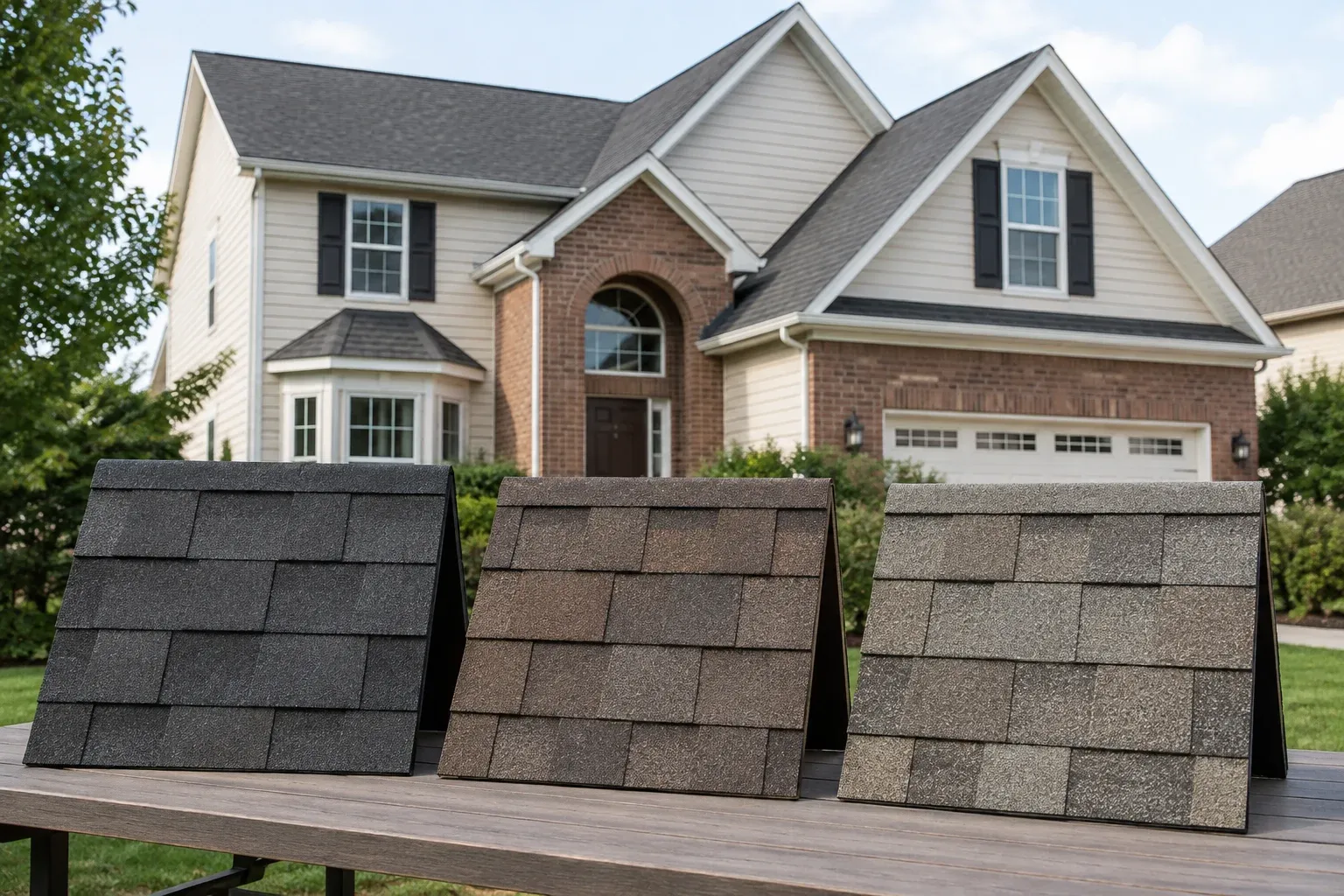
Start with the exterior you plan to keep
Choosing a color for shingle roofing in Toughkenamon is easier when you move the decision out of the catalog and into daylight. A small swatch may look appealing on its own but feel different beside your siding, brick or stone. Start with the exterior features you will keep, compare a few physical samples outdoors, and use roof photographs to support—not replace—that comparison.
The goal is not to find one universally correct color. It is to choose a blend that works with your building from the places people actually see it: the driveway, sidewalk and yard. This approach suits homeowners, rental-property owners and managers of small commercial buildings with pitched shingle roofs. Keep appearance decisions separate from questions about installation scope, roof condition and product suitability.
Build a reference palette before choosing shingles
Make a short inventory of the fixed exterior materials before requesting samples. Brick, stone, siding, fascia, window trim, gutters and prominent doors all influence the result. Pay particular attention to masonry: a brick wall can contain orange, brown, purple and gray tones rather than one simple red. Look at the overall impression from several steps away instead of matching an isolated brick.
Separate definite changes from possible future projects. If new siding or paint is already selected, compare its physical sample alongside the shingles. If repainting is only an idea, do not make the roof depend on an undecided color. For a rental or commercial property, also check any applicable ownership or association requirements before getting attached to a choice that might need approval.
- Identify the siding, masonry and trim that will remain.
- Bring confirmed paint or siding samples into the comparison.
- Note visible gutters, fascia and adjoining porch roofs.
- Check applicable exterior-color approval requirements.
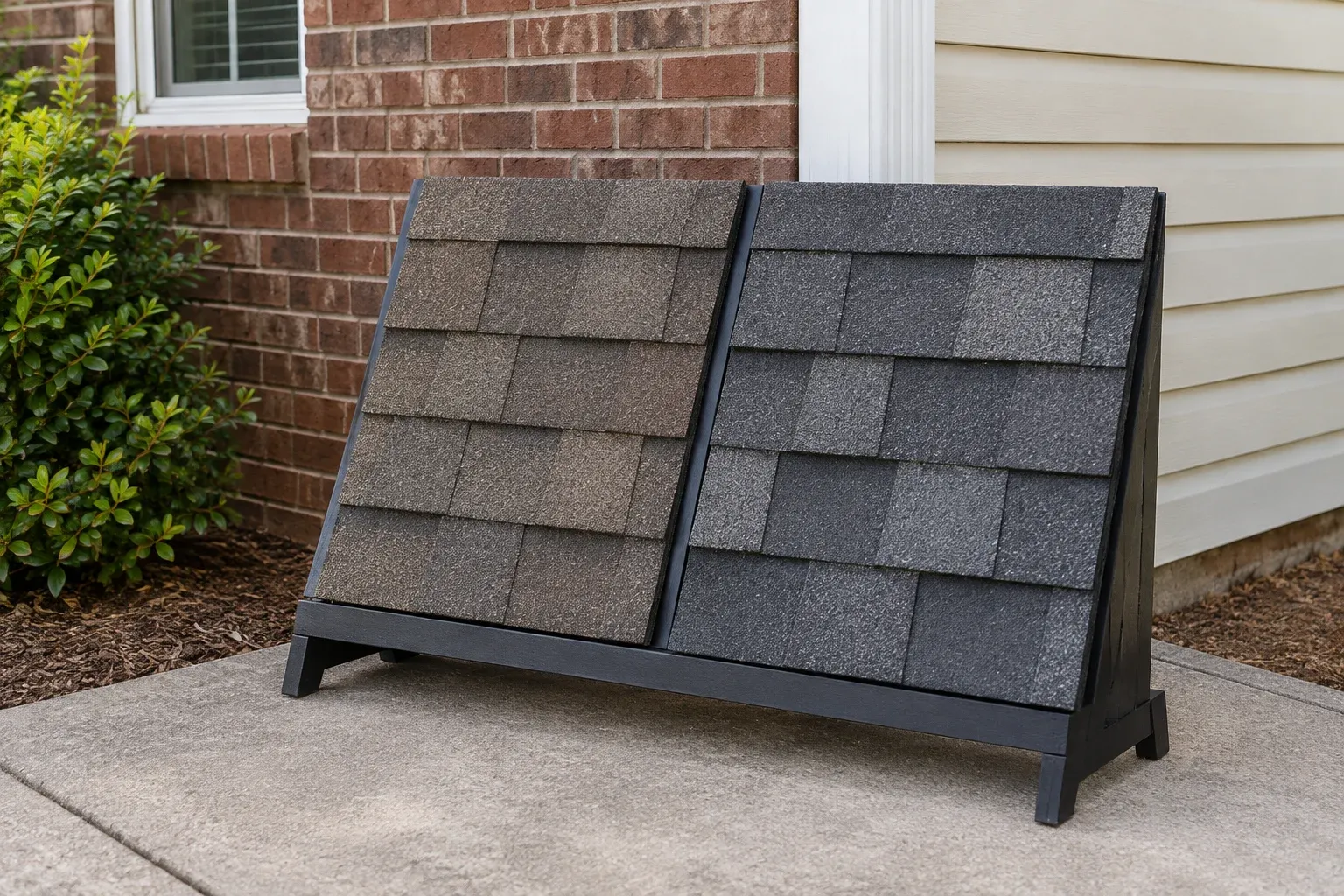
Narrow the field to a few meaningful choices
Begin with three plausible colors rather than every option in a brochure. A useful starting group might include a charcoal, a gray-brown and a warmer brown, depending on the building. These are comparison families, not recommendations for every exterior. Eliminate any option that clashes noticeably with the fixed materials, then concentrate on two finalists. Fewer choices make subtle differences easier to recognize.
Ask to see samples from the actual shingle product line under consideration. Similar color names across products do not establish a match, and a single loose piece may reveal little about the finished blend. A larger sample showing multiple shingle courses is more useful. Keep the product and color identification with each sample so that your preferred appearance can be connected to the correct selection later.
Run an outdoor sample check
Set the samples outdoors near the siding and masonry without fastening them to the building. Use a stable support and keep walkways clear. Compare them in direct daylight and open shade, then revisit them at a different time of day. A sample that looks neutral in one setting may show a warmer or cooler cast in another. You do not need to climb onto the roof to make this comparison.
First inspect the granules close up, then step back far enough to see the samples together with the wall and trim. Move to the driveway or sidewalk if those provide the main view of the building. Ground-level samples cannot reproduce a full roof's slope, scale or shadows, but they are a better color reference than a phone screen. Avoid making the final decision from an indoor countertop alone.
- Compare both finalists beside the same exterior materials.
- View them in sun and shade when practical.
- Check the overall combination from normal viewing distance.
- Record which sample works best and why.
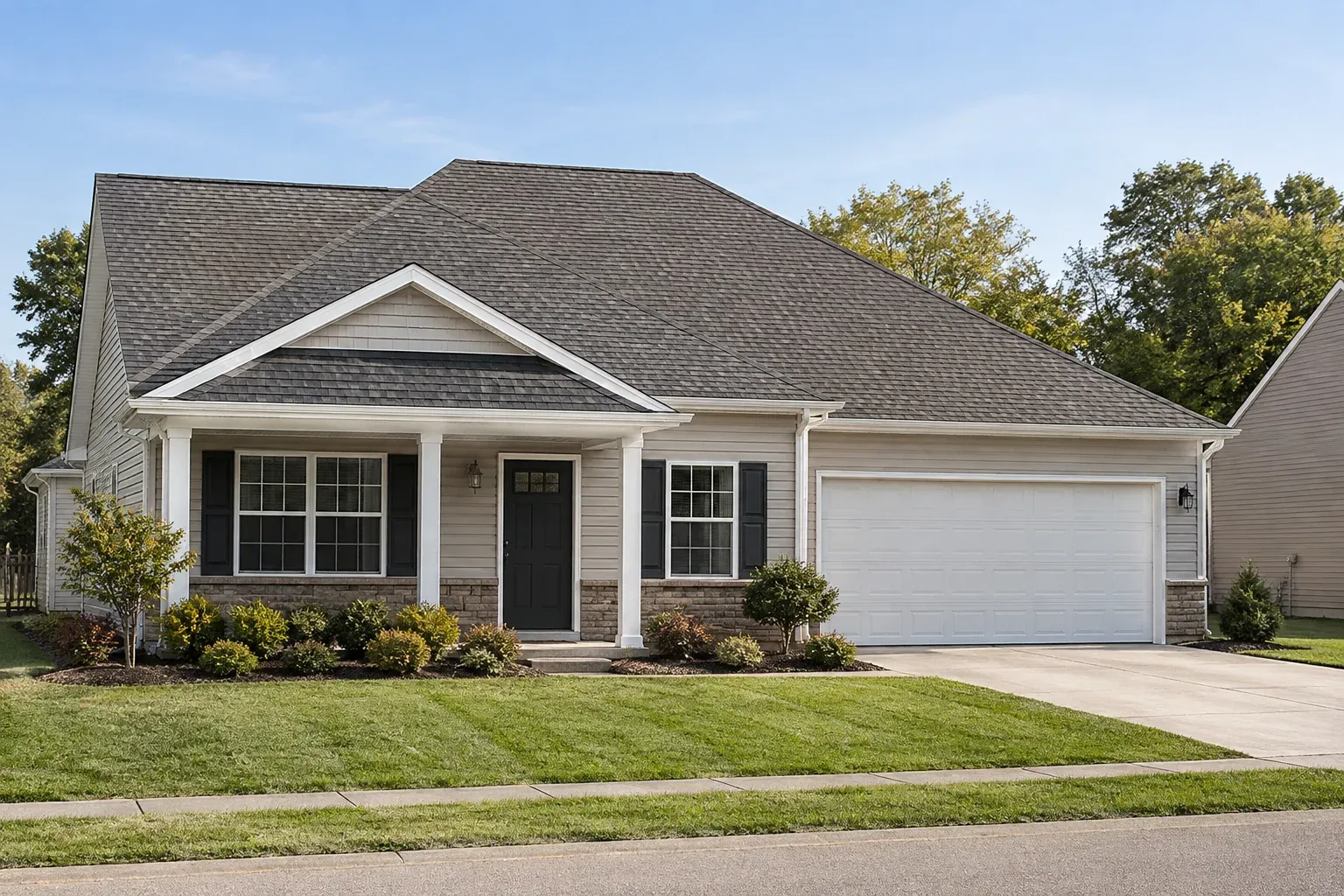
Judge the blend and the size of the roof
Architectural shingles often combine several granule colors, so evaluate the blend rather than treating it as a single paint chip. Notice the lightest and darkest areas, the dominant tone and how strongly individual patches stand out. A blend with pronounced variation can make a large roof visually busy. A quieter blend may be easier to coordinate with patterned brick or stone, although personal preference still matters.
Consider how much roof is visible and what else competes for attention. A broad, steep roof has more visual presence from the street than a roof mostly hidden behind the front wall. Dormers, valleys and separate porch roofs also break up the surface. You do not have to match the roof exactly to the siding; a deliberate contrast can work if the undertones sit comfortably together.
Use comparable roof photos without expecting a perfect match
Once you have two finalists, look for photographs of the same shingle product and color on buildings with comparable siding, masonry and roof shapes. A close-up helps you understand variation; a whole-building view helps you judge visual weight. If an image does not identify the product, treat it as general inspiration rather than evidence that a named color will deliver that exact appearance.
Photos are supporting references, not exact previews. Camera exposure, editing, weather and screen settings can all shift color. Even a nearby roof viewed in person may look different because its slope and surroundings differ. Use those references to ask better questions about the samples, especially whether you prefer stronger contrast or a quieter blend. Keep the physical sample as your main color reference.
Confirm the selection before moving ahead
Before finalizing the selection, write down the manufacturer, product line and exact color designation. Confirm current availability and ask how visible ridge shingles or other roof accessories will coordinate. Color alone does not establish performance or suitability; those questions belong in the broader shingle roofing discussion. If you also need to review proposal details, use the separate guide to comparing shingle roofing estimates rather than letting that task obscure the color decision.
For shingle roofing in Toughkenamon, a useful final check is straightforward: the chosen sample works with the finishes you are keeping, looks comfortable in different daylight conditions, and has a blend you like from normal viewing distance. Keep your selection notes and sample identification together. When contacting EA Construction & Roofing about roofing services, those details give you a concrete starting point without relying on a remembered swatch or an edited photograph.
Frequently asked questions
How many shingle colors should I compare outdoors?
Start with three plausible options, then narrow the choice to two. Comparing a small group beside the exterior materials you plan to keep makes differences easier to judge than reviewing a large catalog all at once.
Can a photograph show exactly how a shingle color will look on my house?
No. Lighting, camera settings, screen settings and the surrounding exterior can change its appearance. Use photographs to understand the overall effect of a roof, then confirm your choice with physical samples of the exact product and color.
Should I choose the roof color before repainting the siding?
Plan both together if repainting is part of the project. Compare the actual shingle sample with the intended paint sample and any brick or stone that will remain. If repainting is only a possibility, prioritize the exterior materials you know you are keeping.