
Storm Damage Repair in Avondale: Why a Roof Can Leak Without Missing Shingles
A roof can look intact and still leak after a storm. Learn where hidden entry points develop, how water travels and what should guide a focused repair.
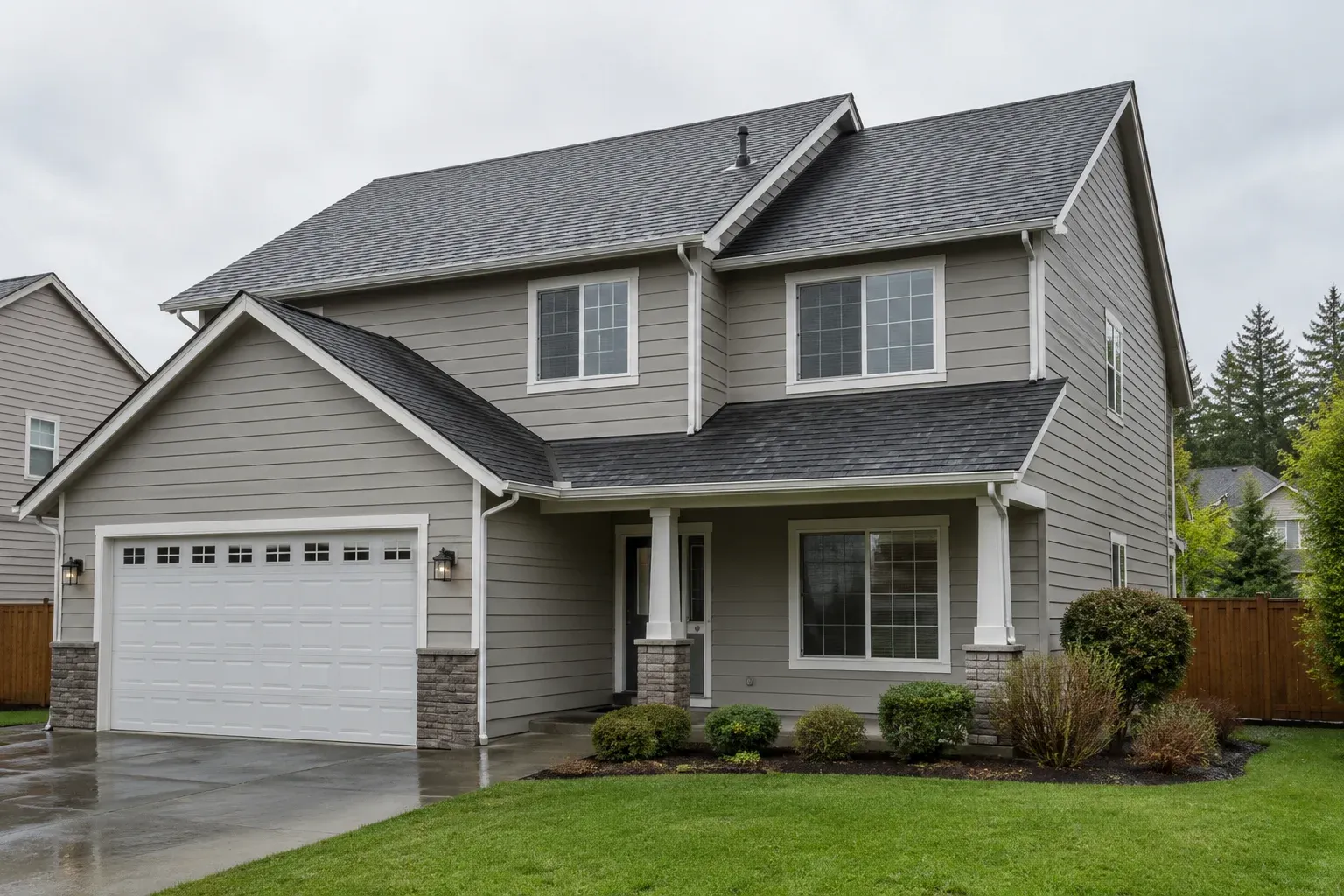
An intact-looking roof can still admit water
Storm damage repair in Avondale often begins with a confusing combination: a fresh ceiling stain and a roof that looks unchanged from the driveway. No missing shingles does not mean no leak. Wind-driven rain can reach vulnerable joints, damaged flashing or disturbed shingle seals that are difficult to see from below. The useful question is not simply what blew off, but where water entered.
For homeowners, rental-property managers and owners of offices or shops with shingled roofs, that distinction matters. A visible stain needs attention, but its appearance after a storm does not prove that every underlying defect is new. Understanding the entry point helps separate storm-related damage from existing wear and keeps the repair focused on the actual problem.
Shingle seals can change without shingles disappearing
Asphalt shingles work as overlapping layers that shed water down the roof. Their seal strips help resist wind lifting the exposed edges. A gust can disturb that bond without removing the shingle altogether. The shingle may settle back into place afterward, leaving a roof that looks normal while providing less resistance to another episode of wind-driven rain.
A lifted or unsealed shingle is not automatically evidence of recent storm damage. Age, installation conditions and earlier wind exposure can also affect adhesion. Inspection looks for related clues such as creasing, tears or displaced material, rather than relying on appearance alone. Lifting shingles to check them is not a homeowner task; unnecessary handling can create additional damage.
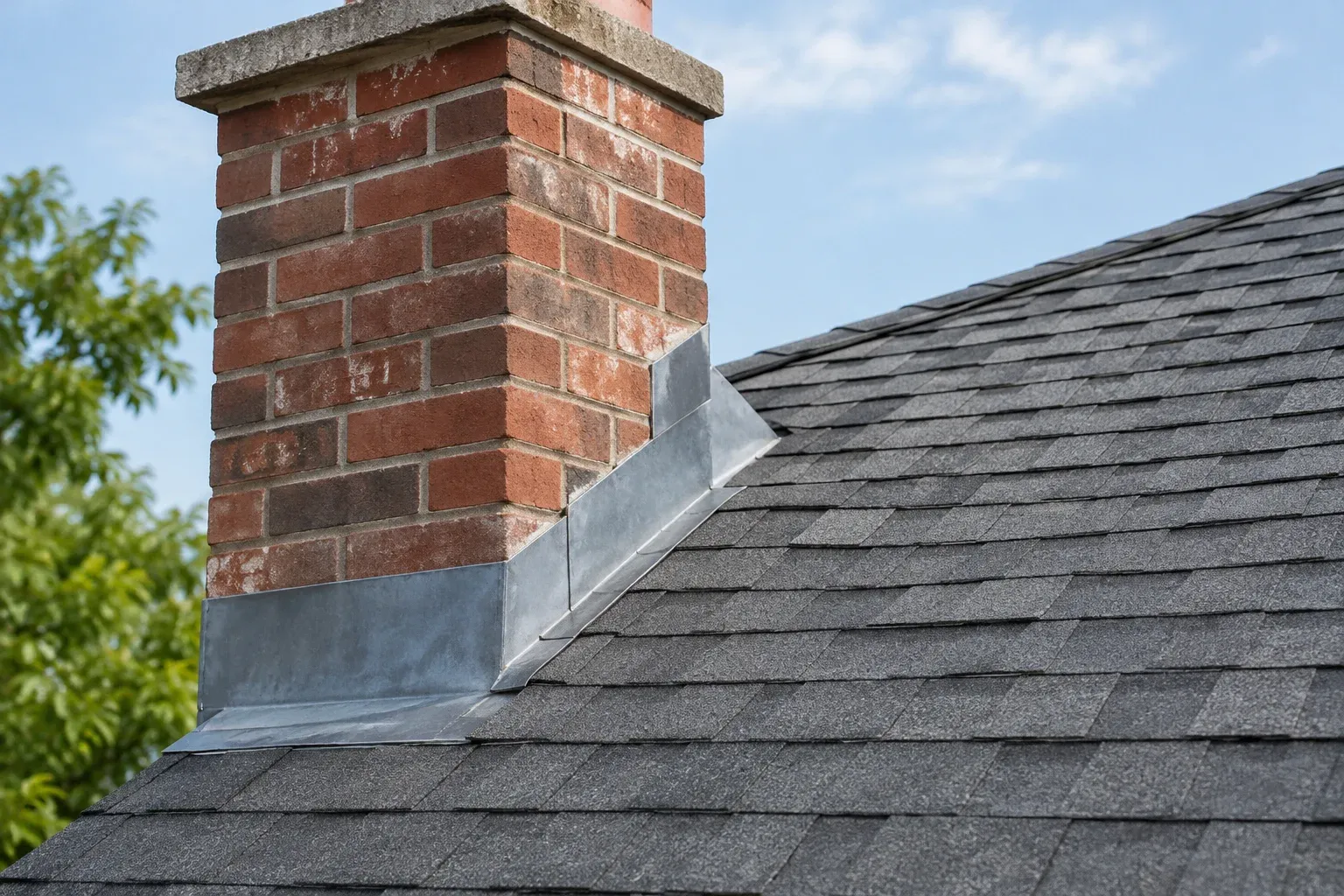
Flashing is a common hidden entry point
Flashing manages water where the roof meets something that interrupts its surface, such as a chimney, wall or dormer. These transitions need more than shingles alone. Bent metal, an open joint or a failed connection can let water behind otherwise sound roofing. The defect may be small and partly concealed, which makes a broad visual check from the yard insufficient.
Wind may move a vulnerable flashing component, while heavy rain may reveal a joint that was already deteriorating. A useful evaluation considers how the metal overlaps adjoining materials and whether water can drain outward. Applying surface sealant without understanding that path may hide the symptom temporarily while leaving the failed detail underneath. The appropriate repair depends on which component actually failed.
Roof valleys concentrate water at vulnerable details
A valley collects runoff from two roof slopes, so it handles more concentrated water than a typical open section of roof. Leaves or small branches can slow drainage and redirect water toward shingle edges. Damage to exposed valley metal, or problems with the roofing layers in a covered valley, can also produce leakage without an obvious missing-shingle pattern.
The inspection should distinguish a drainage obstruction from damaged roofing and consider whether both are present. Removing debris does not repair punctured metal or a faulty overlap. Likewise, replacing nearby shingles will not necessarily correct the valley itself. Ground-level photographs can document visible conditions, but clearing a steep or wet valley should be left to appropriately equipped roofing professionals.
Vents can leak while nearby shingles remain sound
Plumbing vents and roof-mounted ventilation components create other interruptions in the roof covering. A plumbing vent commonly has a flashing base and a flexible collar around the pipe. The collar can crack with age even while the surrounding shingles remain serviceable. Wind or an impact may also disturb a component, creating a leak around the penetration rather than through the main roof field.
These conditions call for checking the whole assembly, not just adding material around the visible pipe. The base, surrounding shingles and connection to the pipe each play a role. A worn collar may be a maintenance issue uncovered by the storm; displaced or freshly damaged parts may support a different explanation. The repair should reflect the observed condition rather than an assumed cause.
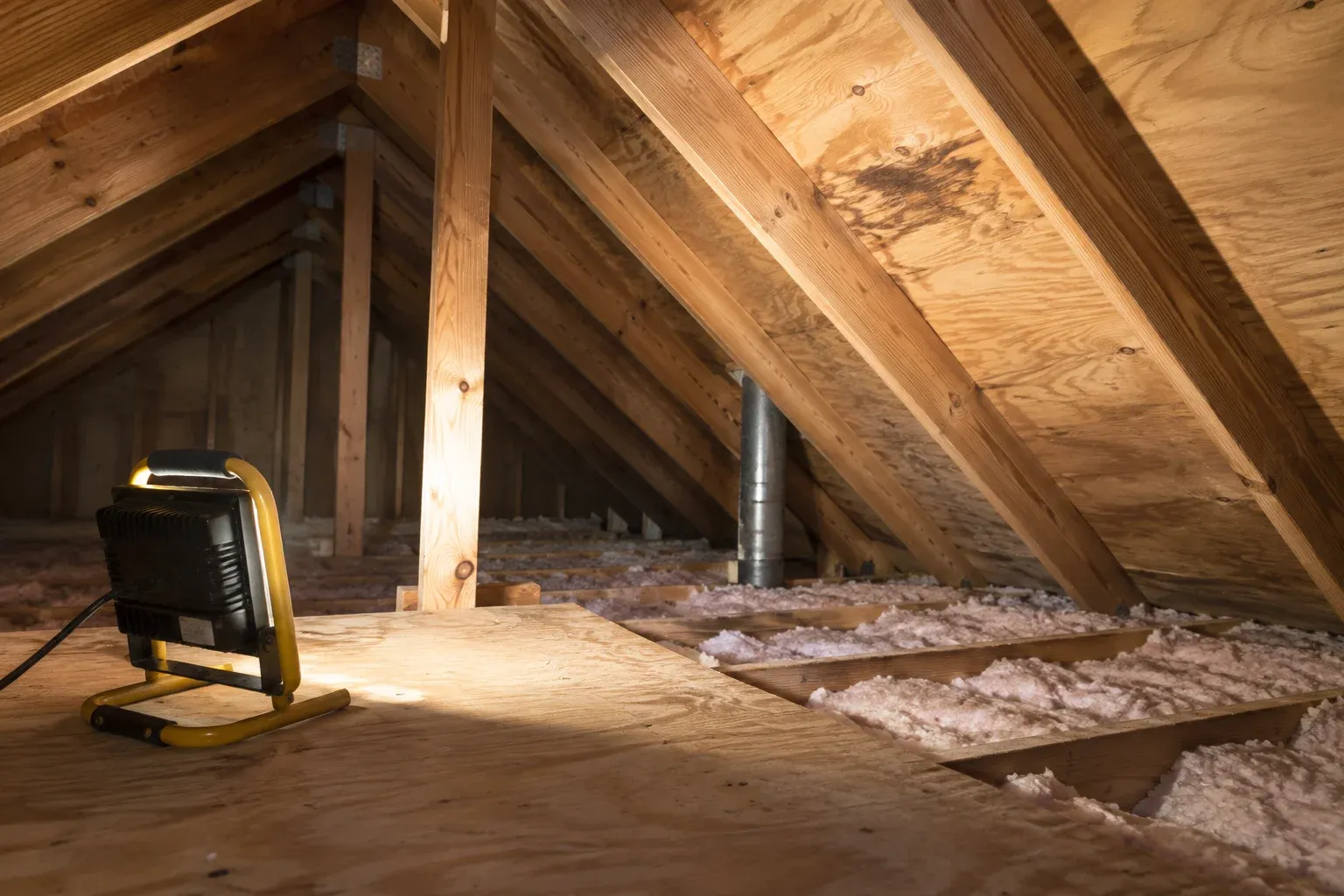
Why the ceiling stain may be away from the roof defect
An interior stain marks where water became visible, not necessarily where it entered. Moisture can run along the underside of roof decking, follow a rafter or drip onto insulation before reaching the ceiling. A defect farther upslope can therefore produce a stain several feet away. Starting a repair directly above the stain without tracing that route can miss the source.
Accessible attic observations can help connect the interior symptom to a roof detail. Damp insulation, staining on wood and a visible drip path may narrow the search, but old marks alone do not establish an active leak. If safe access is unavailable, do not improvise a walking surface. Professional leak detection can investigate the likely route without treating the ceiling mark as an exact map.
Let the evidence guide the repair scope
A useful assessment combines the timing of the leak with physical evidence. Note when the stain first appeared, whether dripping occurred during the rain or afterward, and whether similar wet spots existed before. Recent photos or maintenance records may help. None of these observations independently proves causation, but together they give the inspection a better starting point than the statement that it rained.
The findings should separate visible damage, pre-existing deterioration and anything that remains uncertain. A repair scope should identify the affected detail, explain the proposed work and distinguish roof repairs from interior restoration. The companion guide to what a repair scope should explain offers useful questions for reviewing that description. A specific explanation is more helpful than simply labeling the entire leak storm damage.
Take safe next steps for storm damage repair in Avondale
While arranging an assessment, protect movable belongings and document the stain from a safe position. Keep people away from sagging ceilings and wet electrical fixtures. In a shop, office or rental property, restrict access to the affected area and tell the responsible manager promptly. Do not climb onto a wet roof, puncture a swollen ceiling or attempt an improvised tarp installation.
EA Construction & Roofing provides roofing services, and its storm damage repair page is a starting point for an inquiry. Describe the interior symptoms as well as anything visible outside. For storm damage repair in Avondale, the priority is to identify the entry point, account for the water's route and address the confirmed defect—not replace sound shingles simply because a storm came first.
Frequently asked questions
Can a roof leak after a storm if every shingle is still in place?
Yes. Water can enter through damaged flashing, a deteriorated vent boot, a roof valley or beneath shingles whose seals have been disturbed. A ground-level view cannot establish whether these details remain watertight.
Does a new ceiling stain prove the storm damaged the roof?
No. A storm may cause new damage, expose an older weakness or make a previously unnoticed leak visible. Identifying the entry point and examining the surrounding materials helps distinguish these possibilities, although the exact timing may remain uncertain.
Should the roof repair be directly above the interior stain?
Not necessarily. Water can travel along decking, framing or other surfaces before reaching the ceiling. The stain is a useful starting point for investigation, but the repair should address the confirmed entry point and any related damage.