
Gutter Installation in Cheyney University: Seamless vs. Sectional Gutters
See how roof-edge shape, connection details, and future repair access affect the choice between seamless and sectional gutters in Cheyney University.

Start With the Roof Edge, Not the Product Label
Gutter installation in Cheyney University involves more than choosing a profile and color. The shape of the roof edge determines how many corners, outlets, and straight runs the system needs—and how much difference seamless construction will make. Whether you own a home, manage rental housing, or maintain an office or institutional building, the useful comparison is how each option fits your building, not which label sounds better.
Seamless gutters are generally formed to the length of individual straight runs. Sectional gutters use shorter manufactured lengths connected during installation. Both can provide effective drainage when properly sized, supported, and connected. This guide from EA Construction & Roofing explains the practical trade-offs for planning gutter installation, without treating either option as maintenance-free or universally preferable.
What Seamless and Sectional Actually Mean
A seamless gutter usually has no intermediate seam along a single continuous straight length. It still needs end caps, downspout outlets, and connections where the roof changes direction. Inside and outside corners require joined components or fabricated corner details. Depending on the material, length, and design, a system may also need planned splices or provisions for thermal movement. Calling it seamless does not mean every connection disappears.
Sectional gutters introduce additional joints where standard lengths meet. Those joints must remain secure and watertight while the gutter carries water and responds to temperature changes. More joints mean more locations to inspect, but joint count alone does not predict performance. A poorly supported seamless run can sag, while a properly assembled sectional system can drain effectively. Material quality, compatible fittings, slope, and fastening all matter.
Map Straight Runs, Corners, and Outlets
Long, uninterrupted eaves give seamless construction its clearest advantage: fewer intermediate connections across the same roof edge. A rectangular building may have several long runs and relatively few corners. A building with projecting entrances, wings, or stepped rooflines may instead have many short runs. In that layout, corner workmanship becomes especially important because both seamless and sectional systems still depend on those connections.
Trace where each roof plane delivers water before comparing proposals. A valley can concentrate runoff near a corner, but selecting seamless gutters alone does not solve that loading problem. Gutter capacity and outlet placement need separate attention. Our guide to planning for concentrated runoff at roof valleys explains that drainage issue; it complements this comparison without changing the importance of sound connections throughout the system.
Compare Fabrication and Installation Access
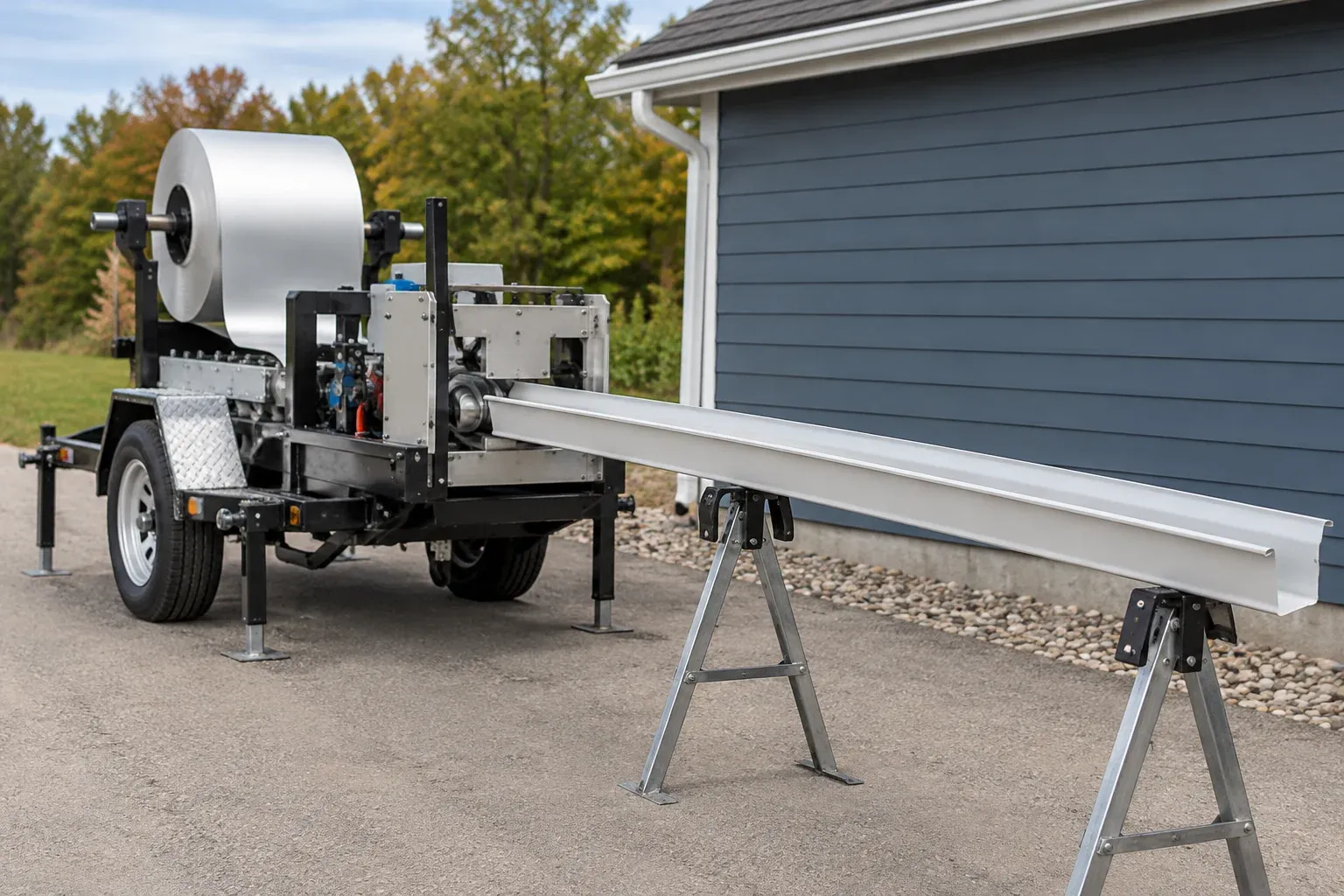
For common seamless aluminum systems, a roll-forming machine shapes metal coil into the gutter profile. Runs are measured and cut for the building, often using equipment brought to the site. This limits intermediate seams, but it also requires suitable equipment access and space to support and handle long pieces. Obstacles such as fencing, landscaping, parked vehicles, and narrow service areas can affect the installation plan.
Sectional lengths are easier to transport and handle individually, though installers must assemble and seal their connections correctly. Neither method eliminates preparation at the roof edge. Loose fascia, damaged wood, or an unsuitable relationship between the gutter and roof-edge flashing should be addressed rather than concealed. If the roof will remain, reviewing what to check when keeping your existing roof can help frame those preparation questions.
Compare Complete Systems, Not Just Seam Counts
Keep the rest of the specification consistent when comparing seamless and sectional proposals. Different gutter dimensions, metal thicknesses, profiles, hanger arrangements, or downspout layouts can matter as much as the fabrication method. A proposal with fewer seams is not automatically equivalent to another proposal with more outlets or a different material. Ask what each design includes and which roof areas each downspout is intended to serve.
Connections are only one part of the drainage path. Water must enter the gutter, travel toward an outlet, pass through the downspout, and discharge to an appropriate destination. Poor slope, blocked outlets, or unsuitable discharge locations can undermine either system. For commercial and institutional properties, also consider entrances, walkways, and routine maintenance access so the design supports the way the building is actually used.
- Compare the same material, profile, and gutter dimensions.
- Identify all corners, splices, outlets, and downspout locations.
- Confirm how the gutter will be supported at the roof edge.
- Include access, removal, preparation, and discharge details in the comparison.
Think Through Future Repairs Before Installation
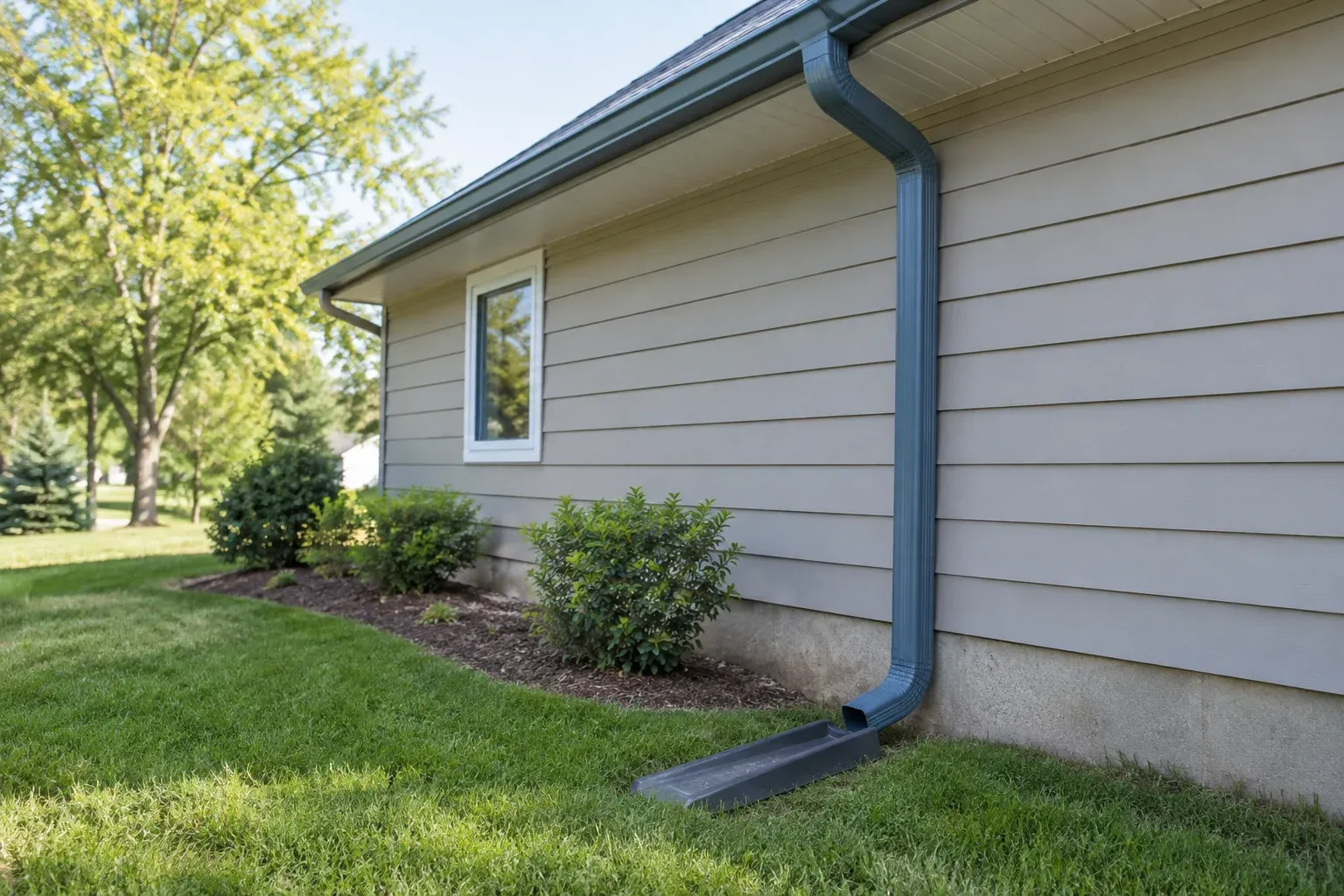
Sectional construction can make a localized replacement practical: a damaged length may be removed while neighboring pieces remain. That depends on compatible replacement profiles and fittings being available, and on the surrounding material staying sound. The new piece still needs correctly assembled joints, adequate support, and the intended drainage slope. A small replacement is not necessarily simple if corrosion or distortion extends beyond the visibly damaged area.
With a seamless system, damage in the middle of a run may call for replacement of a longer length or an appropriate repair splice. A splice introduces a connection where none existed before, so its suitability deserves discussion. Long replacement runs can also require more handling space and access. For either system, ask how future repairs would be approached rather than assuming the original installation method dictates one solution.
Allow for Maintenance With Either Choice
Seamless gutters reduce the number of straight-run joints to inspect, but they still collect leaves and other debris. Corners, outlets, end caps, and downspout connections remain potential trouble spots. Sectional systems add intermediate joints to that inspection route. In both cases, watch for standing water, loose hangers, separation at connections, and overflow. An overflow symptom does not automatically mean the gutter needs a different construction type.
Maintenance planning should fit the property. A homeowner may coordinate periodic professional cleaning, while a rental or facilities manager may need access arrangements around tenants, staff, or operating hours. Ground-level observations can reveal staining or overflow, but close inspection and cleaning at height require suitable equipment and safe access. Neither option removes that responsibility, and fewer seams should not be interpreted as permission to skip checks.
Choose Around Your Building’s Layout
When requesting estimates, ask for the proposed run layout and an explanation of the connection details. Discuss whether access favors long fabricated pieces or shorter sections, how existing fascia will be evaluated, and what happens if damage requires replacement later. Compare the full scope rather than relying on a seamless-versus-sectional price label. Costs depend on materials, geometry, access, preparation, and the work included, not simply the number of seams.
For gutter installation in Cheyney University, the better choice is the system that fits the roof edge, handles the expected runoff, and has a workable maintenance and repair plan. Seamless construction can reduce straight-run joints; sectional construction can offer manageable replacement lengths. Neither advantage settles every project. Contact EA Construction & Roofing to discuss your roof-related project needs and the layout questions that should inform your gutter installation decision.
Frequently asked questions
Do seamless gutters have any joints?
Yes. Seamless gutters typically eliminate intermediate joints along a straight run, but the system still has connections at corners, end caps, and downspout outlets. Some layouts also need planned splices or provisions for movement, so seamless does not mean joint-free.
Are sectional gutters easier to repair?
A damaged section may be replaceable without removing an entire run, provided compatible materials and fittings are available. However, replacing that section also requires restoring the connections, support, and drainage slope. A damaged seamless run may need a longer replacement or an appropriate repair splice.
Which gutter option is better for a building with many roof corners?
Neither is automatically better. Numerous corners reduce the benefit of eliminating straight-run seams because both systems still need corner connections. Compare the actual layout, material, outlet locations, access requirements, and proposed repair approach before choosing.