
Roof Repairs in Hamorton: What If Your Original Shingles Are Discontinued?
A practical guide to unavailable shingles: identify useful records, separate visual matching from technical suitability, and clarify the proposed repair boundary.
Unavailable shingles create two different matching problems
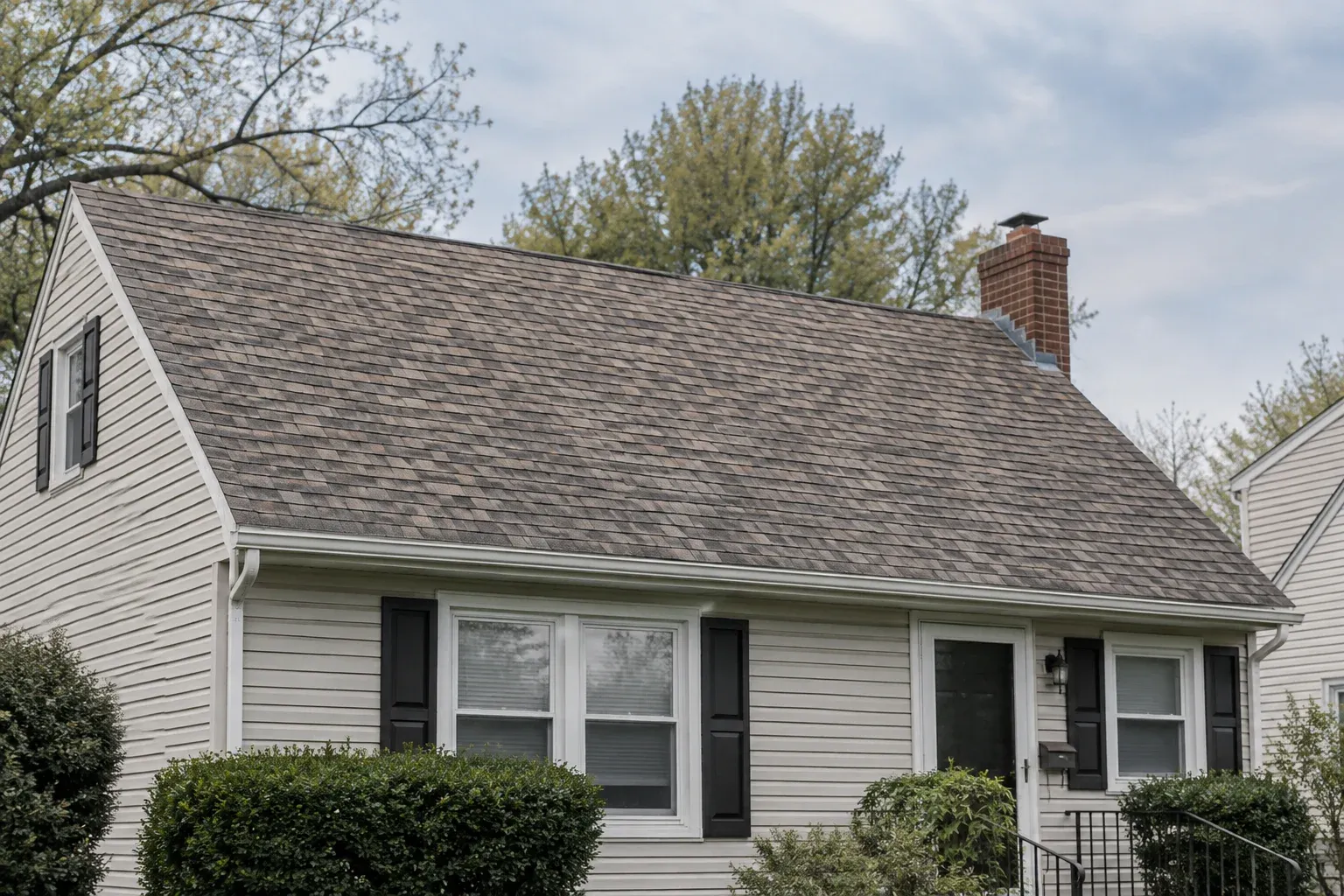
Roof repairs in Hamorton can become complicated when only a small area needs attention but the original shingles are discontinued or unidentified. A supplier may have something that looks close, yet resemblance does not establish whether it can join the existing roofing correctly. Conversely, a technically suitable replacement may remain noticeable against an aged roof. These are separate questions, and treating them separately helps you make a clearer decision.
Start with identification, then technical suitability, then appearance and repair boundaries. Discontinuation alone does not prove that the whole roof needs replacement, and a similar color does not prove that a localized repair is feasible. This applies to homeowners and managers of shingle-roofed rental properties or small offices alike. The useful goal is a documented explanation of what can remain, what must change, and what uncertainties still need resolving.
Gather records before searching for a substitute
Look first for the original installation invoice, product schedule, warranty paperwork, supplier receipt, or leftover bundle wrapper. Useful details include manufacturer, product line, color name, identifying codes, and approximate installation date. A receipt listing only “architectural shingles” leaves much more uncertainty than a specific product designation. Keep records together and note whether they describe the entire roof or only an addition. Separate work completed years apart may have used different products despite looking similar from the driveway.
Packaging can establish more than a remembered color name. GAF's shingle color-code bulletin explains that bundle markings identify color and production information, and that matching color names alone do not establish mixability. Photograph any surviving wrapper clearly, including both ends. Also take ground-level overview photographs showing the affected roof plane and adjacent roofing in daylight. An already-loose spare sample may help with identification, but do not lift installed shingles or climb onto the roof to collect one. Records and photographs narrow the search; they do not certify the current roof's condition or prove that stored leftovers remain usable after years in storage.
Resolve compatibility through product guidance, not resemblance
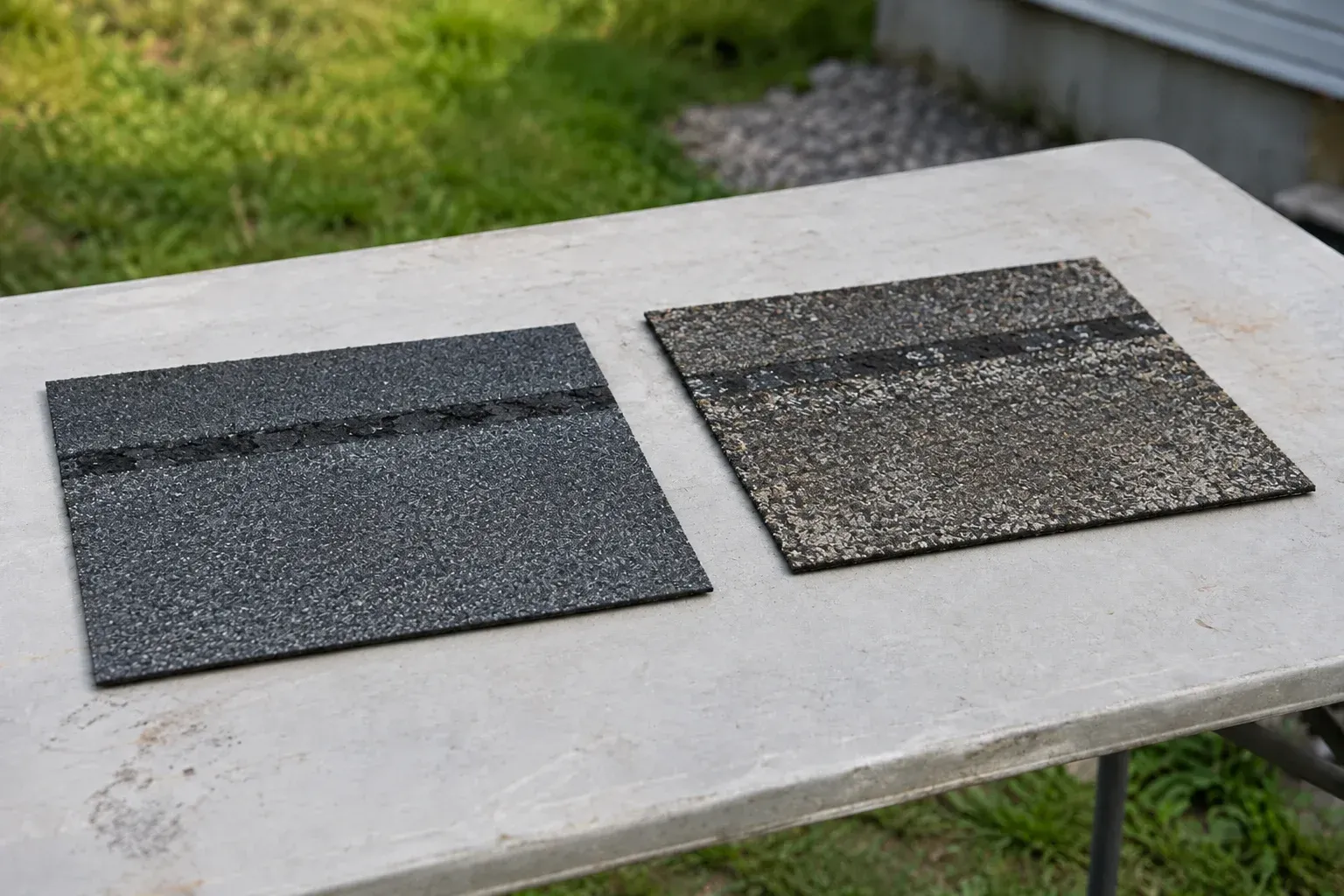
Once a likely product is identified, ask which replacement is supported by applicable manufacturer guidance. Relevant questions include overall dimensions, installed exposure—the portion visible below the next course—fastening requirements, sealant locations, and how the replacement will meet retained shingles. Similar-looking products may differ in these details. A substitute should not be accepted simply because its tabs or shadow lines resemble the original. Ask what documentation supports the proposed arrangement, especially if the original product cannot be identified with confidence. If no supported arrangement can be established, the repair boundary may need reconsideration rather than an improvised fit.
Appearance cannot reveal all the components involved. CertainTeed's explanation of shingle anatomy describes the fiberglass mat, waterproofing asphalt, protective granules, and self-sealing strips. Those strips help shingles resist wind uplift; a convincing surface color says nothing about whether the proposed repair addresses sealing correctly. Ask how surrounding shingles will be handled when their existing bonds are disturbed, and which current instructions apply. GAF's storm-damaged shingle guidance says individual replacement can be possible, while specifying attention to removed fasteners and resealing surrounding shingles. That is product-specific guidance, not blanket approval for every substitute or roof. The responsible question is whether the proposed materials and installation details work together at this particular repair, including any necessary accessories. Manufacturer guidance should also be checked against the actual product and conditions, rather than transferred from an unrelated shingle simply because both are asphalt.
Set realistic expectations for weathered-shingle matching
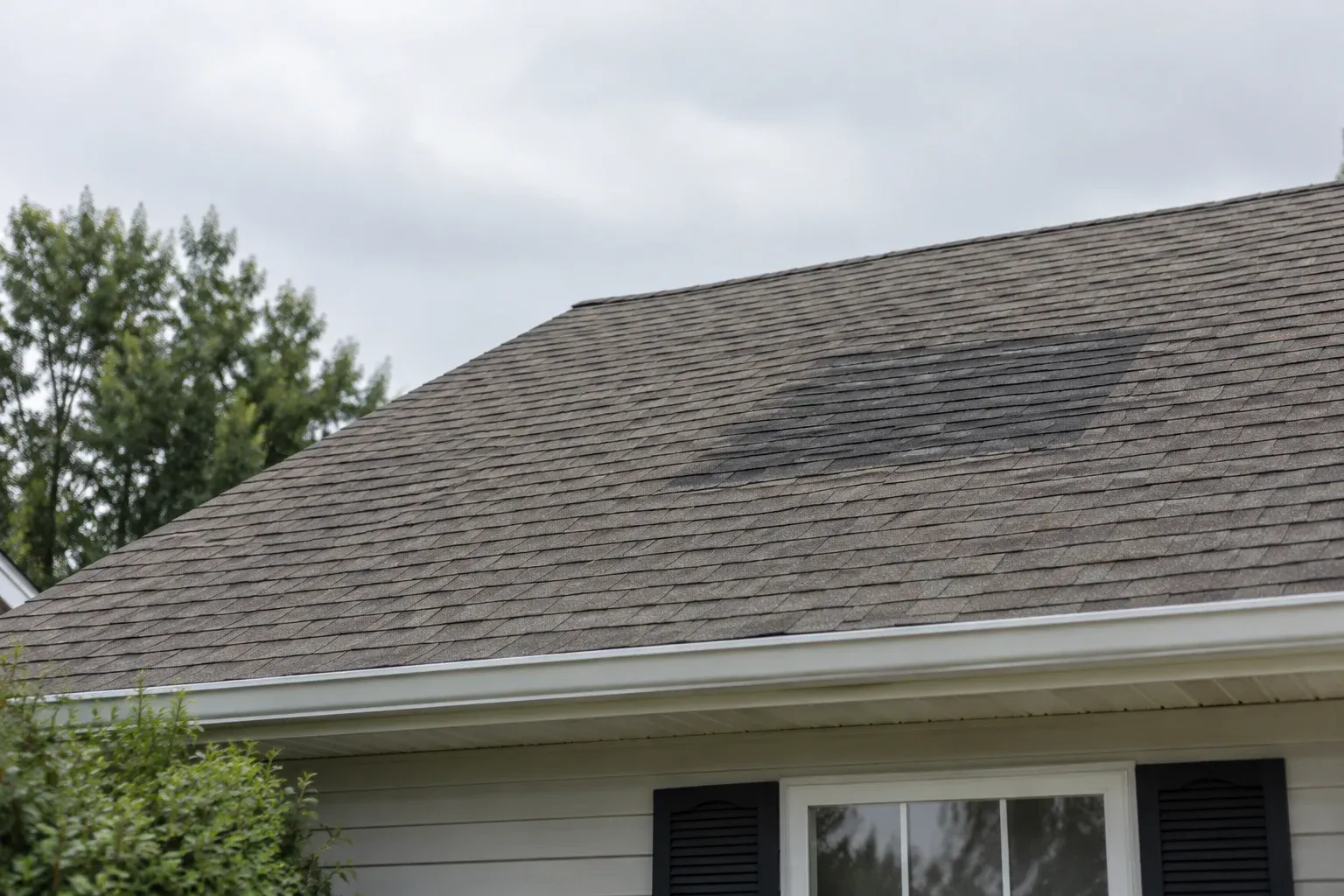
After technical suitability is addressed, evaluate the likely visual difference. Older shingles have experienced years of exposure, while a replacement has not. Surface condition, staining, production differences, and lighting can all affect the comparison. Even an unused leftover from the original installation may not resemble the exposed roof exactly. Review a physical sample in daylight rather than relying solely on a phone image or screen rendering. Compare from normal viewing positions as well as closer reference photographs; a small sample cannot fully predict how an installed area will read across the roof plane.
Do not accept a promise that the patch will become invisible after a few seasons. Its appearance may change, but the eventual degree of blending is uncertain. GAF's color-code guidance specifically distinguishes products by their complete codes and warns of shading issues when codes differ. For broader background, the guide to choosing shingle colors explains a separate decision: selecting an overall roof palette. Here, the narrower question is whether an unavoidable repair contrast is acceptable. Ask to have the expected difference described before work begins, including whether the replacement's profile or shadow pattern will stand out even when its basic color looks close.
Understand where the repair stops—and why
Ask for the proposed repair area to be identified on a photograph or clear description. Which shingles will be removed, which surrounding courses must be disturbed, and where will new material meet old? The visible defect and the workable repair boundary may not be identical. Surrounding shingles need to tolerate the handling necessary to complete the repair. Ask what happens if they crack or cannot be lifted without damage. Our guide to comparing repair scopes offers related questions about defining included work, but material compatibility should be resolved on its own merits, not inferred from the size or price of a proposal.
If a wider area is proposed, ask whether the reason is technical, condition-related, or cosmetic. Replacing more shingles to establish a workable transition differs from replacing more solely to reduce visible contrast. Neither explanation should remain vague. Clarify what retained roofing is expected to remain serviceable and what limitations apply to it. If water entry has continued after earlier work, questions about a returning leak belong in a separate diagnostic discussion; a better color match will not establish the cause. Before authorizing a change in scope, request an explanation of the discovered condition and how it affects the boundary. This keeps a discontinued-product problem from becoming an unexplained expansion of work and gives you a useful record for later maintenance decisions.
Make the decision with the uncertainties clearly stated
Before deciding, check that the explanation answers four practical questions: what identifies the existing material, what supports the replacement's technical suitability, what appearance difference is expected, and why the repair ends where proposed. Missing identification should be acknowledged rather than disguised by a confident color recommendation. Keep copies of product information and any manufacturer response with the final scope.
For roof repairs in Hamorton, the sensible outcome is not necessarily an invisible patch or the largest replacement area. It is a clearly explained approach that accounts for compatible materials, surrounding roofing, and realistic appearance expectations. If one of those points remains unresolved, ask for clarification before approving the work. Discontinued shingles make documentation more important, but they do not replace the need to evaluate the roof actually present.
Frequently asked questions
Does a discontinued shingle mean the entire roof must be replaced?
Not automatically. The decision depends on whether a technically suitable replacement and workable repair boundary can be established, along with the condition of surrounding roofing. Product unavailability alone does not establish the necessary scope.
Can a photograph identify the original shingle?
A photograph can provide clues about shape, pattern, and color, but it generally cannot establish the exact product or its installation requirements. Original packaging, invoices, and manufacturer records provide stronger identification evidence.
Will replacement shingles eventually match the older roof?
That cannot be promised. Weathering, production differences, surface condition, and lighting can leave a visible contrast. Review the expected appearance separately from whether the replacement is technically suitable.