
Roof Repairs in West Chester: When Should You Repair the Ceiling Stain?
A practical sequence for addressing a roof defect, tracking ceiling moisture and deciding when interior finishing can begin.
Separate roof repair from the cosmetic finish
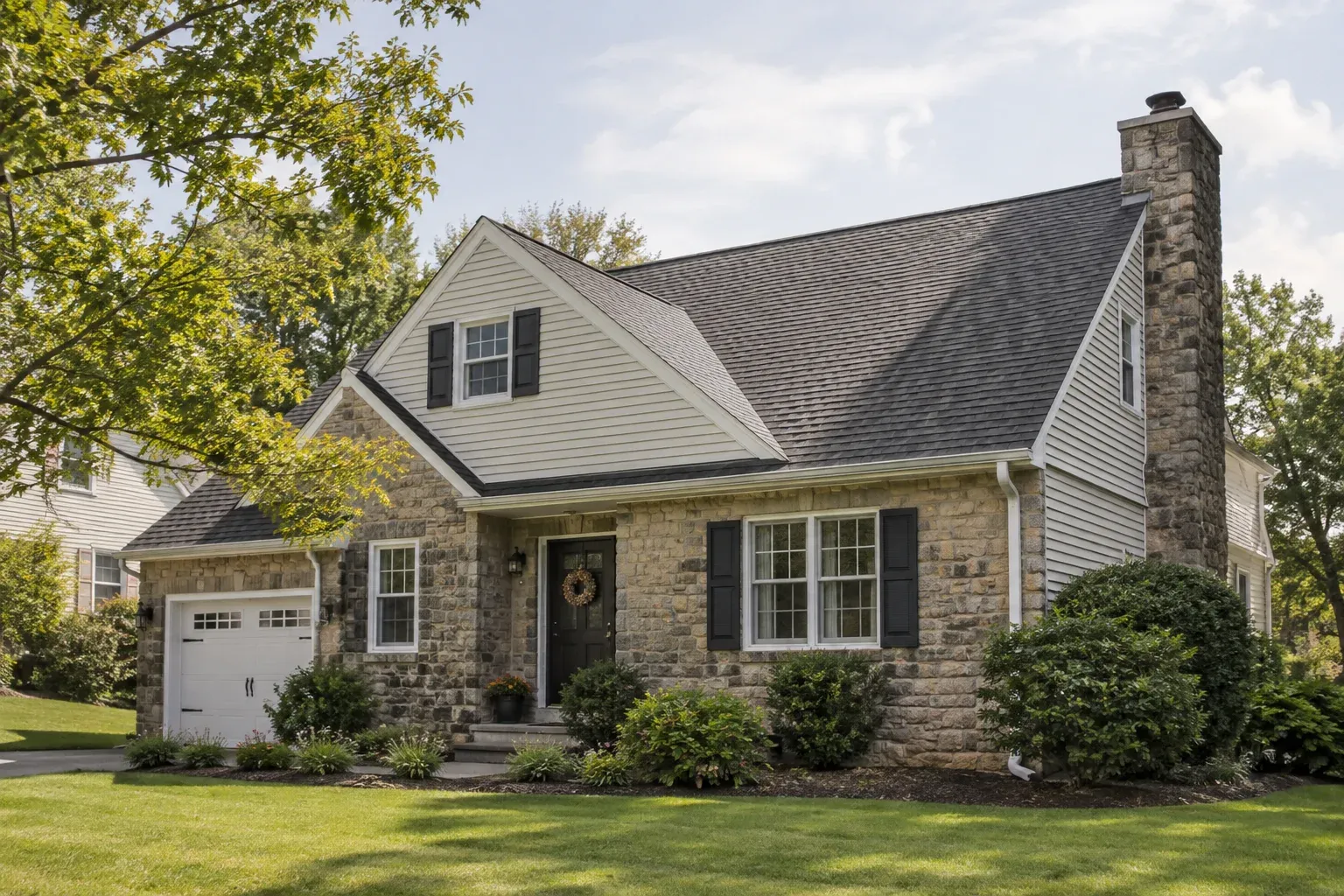
For homeowners planning Roof repairs in West Chester, a ceiling stain creates two jobs with different finish lines: correcting the roof defect and restoring the room below. Painting too soon can hide useful evidence or cover material that still needs drying. Yet postponing all interior attention is not sensible either. Wet materials may need prompt mitigation while the roof problem is being addressed. The useful distinction is between necessary damage control and cosmetic finishing.
Treat the ceiling as part of the repair record, not as the sole test of success. Photograph its condition, establish what caused the roof leak, document the correction and confirm the condition of affected materials before decorating. A stain can remain after drying, while a clean-looking surface can conceal moisture. Neither a persistent brown mark nor one dry afternoon provides enough information on its own to decide that the work is finished.
Record the ceiling before its appearance changes
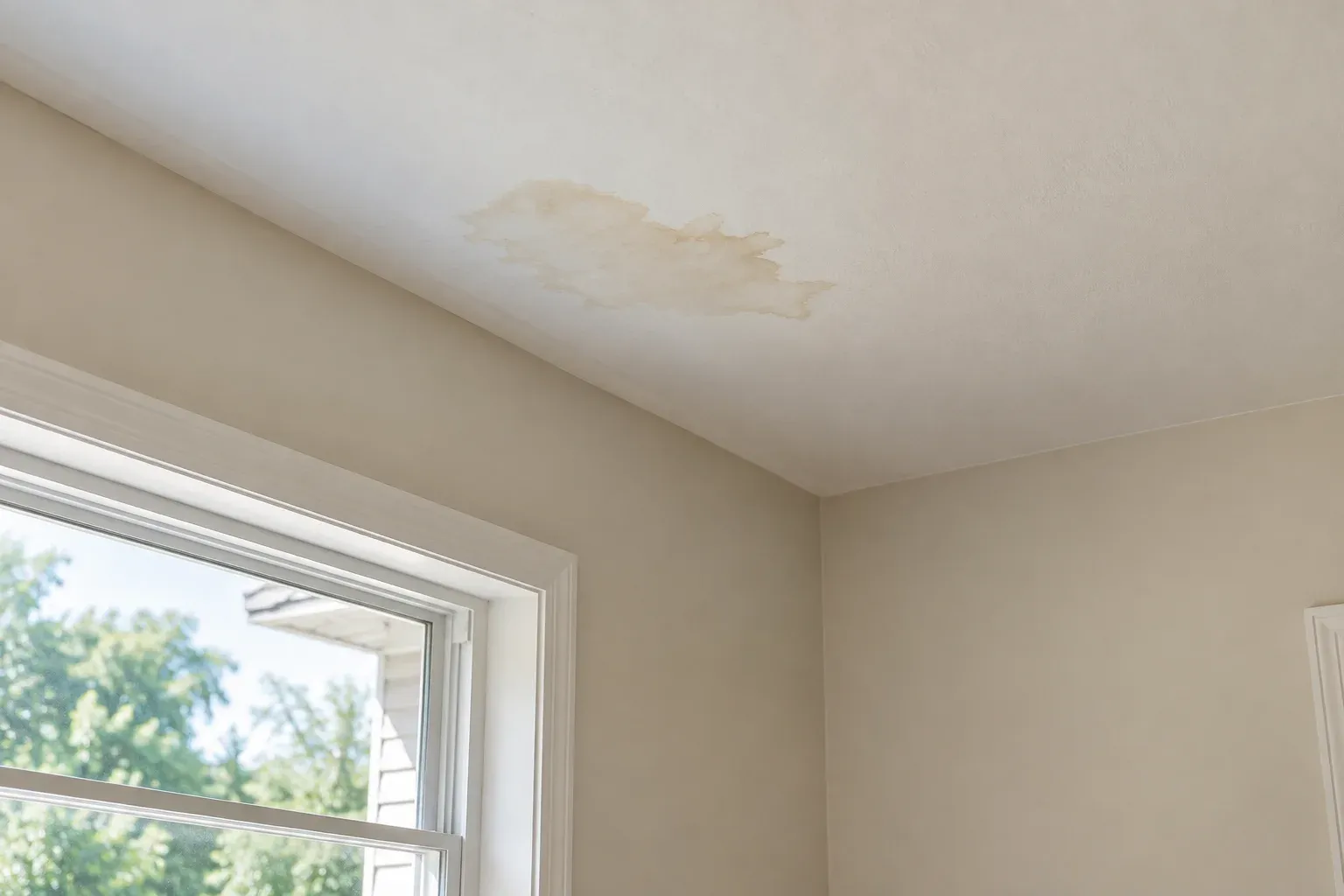
Before anyone patches or paints, take a wide photograph identifying the room and closer photographs showing the stain's outline. Note the date, recent rainfall, any dripping and whether the mark has changed. Use the same viewing position and similar lighting for later comparisons. Keep observations factual: “new damp patch beside the window after rain” is more useful than assuming that a particular shingle or chimney joint is responsible without an inspection.
Share this record with the roofing professional and ask that exterior findings be connected to the interior observations. Our guide to what a useful roof report should show explains why location references and photographs matter. For a rental property, office or small commercial building, designate one person to collect occupant reports so dates and room names stay consistent. Do not climb onto the roof or enter an unsafe ceiling space to improve the record.
Establish what the roof correction actually covers
Roof repairs should address an identified exterior defect rather than simply accompany an interior patch. Ask what was found, where it was found and what correction is proposed. GAF's roof-leak guidance identifies damaged shingles and deteriorated flashing among possible causes of water entry. Those examples are possibilities, not a diagnosis for your building. If the source remains uncertain, clarify what further investigation is needed before treating the roofing portion as complete.
Keep the roof scope separate from ceiling restoration in written discussions. This helps identify whether damaged decking, wet insulation, interior access or finish repairs are included, excluded or still undecided. The principles in comparing roof repair quotes are useful here: compare the described work, not just totals. If matching shingles becomes an issue, settle the proposed material and repair boundary before assuming the exterior work will blend perfectly with the existing roof.
Distinguish residual staining from unresolved moisture
Drying should not wait for a convenient painting date. EPA's moisture guidance recommends drying water-damaged areas and items within 24–48 hours to help prevent mold growth. That is a prompt-action recommendation, not a guarantee that every ceiling assembly will be dry within two days. The amount of water, affected materials and access all matter. Ask an appropriate professional whether materials can be dried in place or require controlled removal and replacement.
An old stain may remain visible after the moisture problem has been corrected. Conversely, an unchanged outline does not establish that the back of the drywall or insulation is dry. New spreading, fresh dampness, renewed dripping or deteriorating finishes justify follow-up. Compare observations over time, but do not deliberately wet the roof yourself. A dry interval without comparable weather may provide little evidence about a leak that appeared only under particular rain or wind conditions.
Confirm material condition, including inaccessible areas
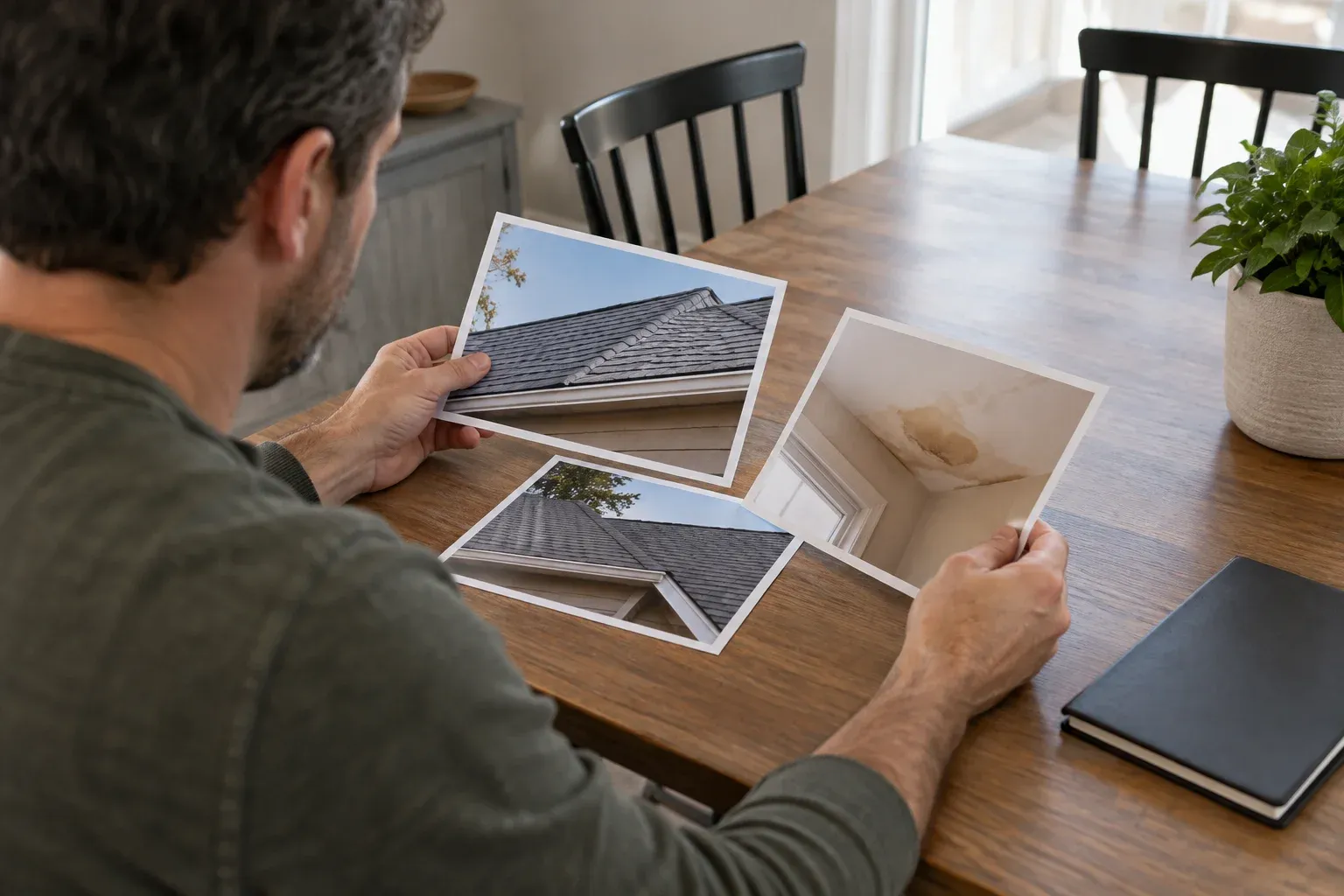
When hidden materials may be affected, ask how their condition will be evaluated. EPA describes moisture meters as tools investigators can use to locate wet areas and monitor drying. A reading needs context, including the material, instrument and measurement location; a single number should not become a universal clearance threshold. Request a plain-language explanation of what was checked, what remains inaccessible and what evidence supports proceeding with ceiling work.
Limited access deserves an explicit plan rather than an assumption. Our article on investigating moisture without attic access discusses why access constraints should be raised early. Avoid opening suspect cavities yourself, particularly where hidden mold may be present. If there is sagging, active water near electrical equipment or material that appears unstable, keep people away from the affected area and seek appropriate professional help. Cosmetic work should not conceal an unresolved safety or moisture concern.
Use a clear handoff before ceiling finishing
Before approving cosmetic work, bring the roofing and interior information together. You should understand the completed roof correction, any remaining uncertainty, the condition of affected ceiling materials and the drying or replacement work performed. Agree on what would trigger another call. The questions in our guide to a leak returning after a patch can help frame that follow-up without assuming that every remaining stain means the roof repair has failed.
Only then decide whether the ceiling needs stain treatment, surface repair or material replacement. EPA advises against painting moldy surfaces and says surfaces should be cleaned and dried before painting. Primer is not a moisture-control measure. Ask the interior contractor to follow the selected products' substrate and drying requirements. If the condition remains uncertain, resolve that uncertainty rather than using a fresh coat to make the room appear complete.
Keep the evidence after the ceiling looks normal
Keep the original ceiling photographs alongside the roof scope, completion photographs, interior moisture observations and any written follow-up instructions. The recordkeeping approach in our guide to keeping roof completion records also helps organize a smaller repair. Label roof and interior work separately so a future contractor can distinguish the exterior correction from later decorating. Keep any documented limitations with the same file rather than losing them in separate messages.
The practical sequence for Roof repairs in West Chester is to document the stain, address the roof defect, manage wet materials promptly and confirm readiness before cosmetic finishing. Do not demand that discoloration disappear as proof of success, or accept one dry spell as conclusive. A documented correction and an informed assessment of affected materials provide a stronger basis for restoring the ceiling and returning the room to normal use.
Frequently asked questions
How long should I wait after a roof repair before painting the ceiling?
There is no universal waiting period. The roof defect should be addressed, affected materials should be adequately dry and sound, and unresolved signs of moisture should be investigated. Follow the coating manufacturer's requirements rather than relying on a fixed number of days.
Does a remaining brown stain mean the roof repair failed?
Not necessarily. Discoloration can remain after materials dry. Expanding edges, fresh dampness, renewed dripping or deteriorating material warrant follow-up, but appearance alone cannot confirm whether a leak is active.
Should wet ceiling materials stay in place until the roof repair is confirmed?
Not automatically. Wet or damaged materials may need prompt drying, controlled removal or replacement. Necessary damage mitigation can overlap with roof work; final cosmetic finishing should wait until moisture and material-condition questions are resolved.